Tularemia – Caused by Ticks and Deer Flies
Tularemia, or rabbit fever, is a bacterial disease that can infect humans and animals. Although the disease can be found throughout the US, children get hit the hardest in summer when ticks and deer fly peak.
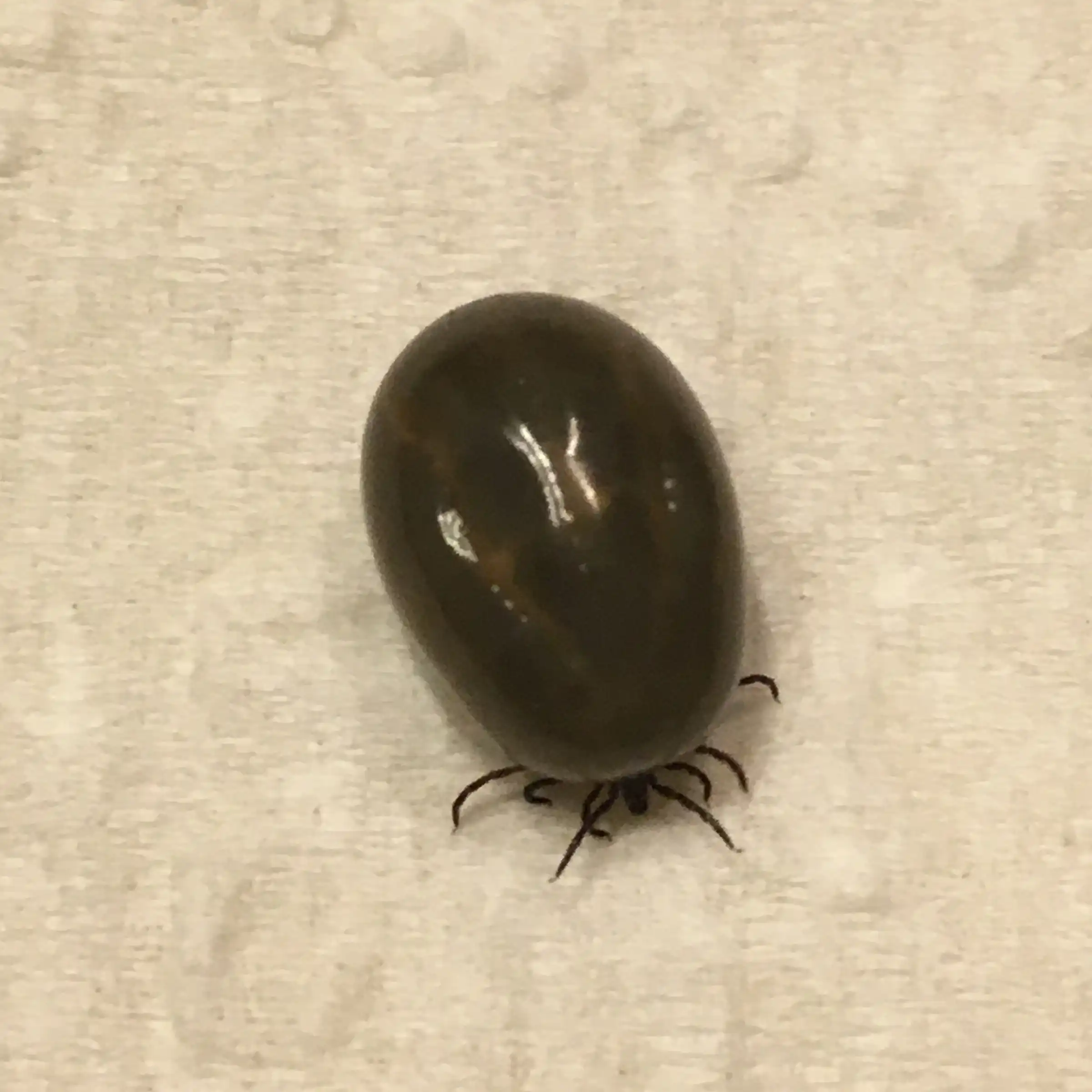 Tularemia is commonly spread from blood or tissue while handling infected animals, the bite of an infected tick, contact with fluids from infected deer flies or ticks, or eating insufficiently cooked rabbit meat. Tularemia is not spread from person to person.
Symptoms of Tularemia
Symptoms of Tularemia may vary depending on how it was introduced to the body. When people are infected due to handling an animal carcass, symptoms can include an ulcer at the site where the bacteria entered the skin (usually on the hand and with slow growth).
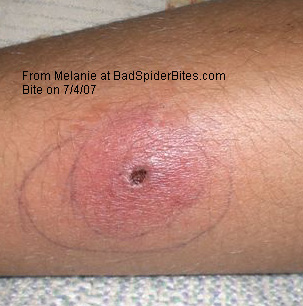
The ulcerated bite can look much like that of a spider. Still, the swollen lymph nodes can help in identifying Tularemia. If this bacteria is inhaled, an illness much like pneumonia can follow.
If you are unfortunate enough to ingest this bacteria, you may have abdominal pain, sore throat, abdominal pain, diarrhea, and vomiting.
Symptoms usually show within the first two weeks (typically within a week) after exposure. They can be treated with streptomycin or gentamicin. Other types of antibiotics may also be effective.
Once you are infected with Tularemia and have recovered, you will not likely become infected again.
Measures that can be taken to prevent Tularemia include (especially those hunting):
- Do not come into contact with untreated water.
- Use thick gloves when handling animals (such as skinning a deer).
- Try not to be bitten by deer flies and or ticks. This is hard to do, but you can take a few steps that may help. They include monitoring clothing for ticks that may be climbing; wearing clothing that will make the tick stand out, such as light-colored clothes. Tuck in clothes and wear head protection (net).
- You can also use insect repellent that contains a DEET mixture of up the 30, making sure to stay away from the face. A repellent that contains permethrin can be used to treat clothes.
- Most importantly, monitoring yourself for ticks or checking every few hours will help because the tick usually does not transmit disease until it has been attached to your skin for four or more hours!
If you find a tick, make sure you remove it ASAP. The best way to do this is by using tweezers (or whatever is close to tweezers) and grabbing the tick as close to the skin as possible, then pulling it straight up (out) without turning.
The goal is to get the entire tick and not leave part of the body in the skin. Make sure to wash and clean the area.
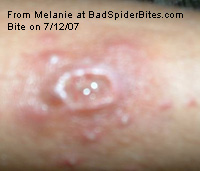
Here are some pictures from one of our visitors, Melanie.
1) a couple of days into the tick bite
2) about a week after the tick bite
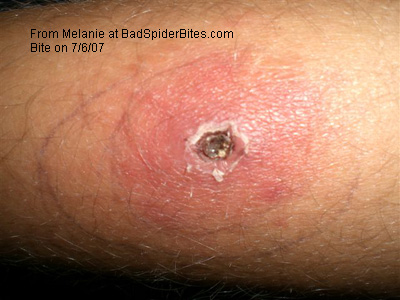
3) about 10 days after the tick bite


did Jing Yi get help? sounded really serious, bummer.
Some one please help me! For about 7 or 8 years I have had this on going patch of dime and nickle sized holes appear on my shin. It feels like something is eating my flesh inside out then it begins to burn and a red mark appearance. Then after a couple of days the red mark begins to bleed and creates a scab. The scab gets smaller and smaller over weeks then another one comes up. Also I’m starting to get small ones other places but nowhere near as bad.
I have been to the doctor, Grady in Atlanta GA, and they couldn’t tell me what it was. They mention tested my for everything and still no cure.
Now I do remember getting bit by what I thought was a misquote but a misquote won’t do this.
Pic included it’s a recently opened hole the scab came off during my nap and the smaller red mark is how it looks before… The white ones are the old ones…
Again help me please and thanks
Hi, Tom (Tom Clark #8. June 15th, 2009 at 5:11 pm )
I suspect myself the Tularemia. It was a tick bite two years ago and I had been sick since. doctor doesn’t have a clue what is going on with me and they think it was my imagination. I used to be a very health person, and I am very sick now. I know I am going to die a year or two if I don’t act quick. I talked to my family doctor asking test for Tularemia, but he said this is not his field and he does’t know what to test for.
Would you kindly let me know how to test for Tularemia in details so I can get tested.
Thank you so very much!!
Sharon:
Yes, ticks do bite and then fall off. In fact, it is required as part of their life cycle. As young larvae/ nymphs, the ticks need two blood meals, typically on small animals like mice and birds, to mature to adults. This is typically where they pick up diseases such as Lyme’s. Humans are usually a third blood meal for the adults to reach sexual maturity and lay their eggs. When they’ve had their fill, they will just fall off. Adult ticks are typically attached for about 48 hours, and chances are good that you’d have noticed it by then.
So the good news is, it probably wasn’t a tick. In my experience, fly and mosquito bites itch far more than tick bites. But at any rate, always respond to bites by washing them out with soap and water. Watch it to make sure it doesn’t develop a rash or bulls eye, although that isn’t always a reliable indicator, either. About 25% of people with Lyme’s never see a bull’s eye.
Unless you start not to feel good, I would say don’t worry about it.
I have a itch on my leg , possibly from a bite. My first thought was a tick.. but doesnt a tick attach itself to you and you have to remove it? Does it bite and fall off? anyway it itches like crazy..wat do you think could be the cause? Sharon
That’s really nice of you to still help out animals after that!
I would do the same thing.
Hi, I contracted Tularemia in 2001 from a kitten bite. A den of feral cats had taken up residence in an abandoned house next door. Some of the cats and their kittens would forage for food at our house in Southern Illinois. One Friday afternoon, I noticed a small kitten walking like it was “drunk”. Warning bells should have sounded, but in my haste to “help” the kitten I picked it up in an attempt to feed it. The kitten bit me on the left index finger. Within 3 days I was in the Emergency Room with a very high fever, severe headache, ulcerated finger and severe aversion to light.
The ER doctor admitted me even though he was not sure what I had, and I spent the next two weeks receiving continuous IV therapy of Doxycycline. Constant fever, migraine, and sensitivity to light remained throughout. In the meantime, the infectious disease specialist refused to consider the possibility of tularemia from my wife who had been contacted by a friend who had known someone in the 1960’s who had had the disease. The Infectious Disease specialist refused my wife’s request because (direct quote) “The test is very expensive and it never comes back positive, anyway”…. My wife, thankfully, convinced our family physician to order the test for Tularemia, even though he admitted that he was told in Med School that he would probably never see a case of it. A few days after the sample was sent off, a call was placed to the Infectious Disease doctor that I did, indeed, have tularemia. The Center for Disease Control was contacted within 24 hours of the diagnosis and my IV therapy shifted to Gentamycin and then Streptomycin for an additional five days. After about 16 days in the hospital and hundreds of units of doxycycline, gentamycine, and streptomycin, as well as two surgeries on my index finger to effectively “cut out” the ulcer I was released home with a “Pic” line running from my left arm directly into my heart for another week of “home IV therapy”.
The tularemia made a come back about one week after being home and I ended up in Barnes Jewish Hospital in St. Louis, MO for another week of intensive IV therapy before being released. Our best hypothesis is that the kitten had contracted the disease, bit me, wondered off and died (its body was sent for Necropsy once tularemia was confirmed). Many of the other cats in the clutch also died and the County quarantined, trapped, and euthanized the remaining brood. Years later and I still have recurring bouts with the tularemia symptoms. It has become standard practice for our family physician to subscribe a week of oral antibiotics when my fevers and headaches reoccur. Since no long term studies have been conducted, I do not know if the maladies I suffer from are common after infection, though I have talked with a few people who have known family members who also suffered symptoms for years after exposure. I remind people that Francisella tularensis is a naturally occurring bacterium and while it is rare, it can lead to a lengthy hospital stay and long-term consequences. I’ll still go out of my way to help a sick or injured animal… I just do a better job of protecting myself first. =)
A couple of weeks ago we found this spider it is different then any I or my husband has ever seen, We don’t know if it’s venomous or not, looks like it has possibly eight eyes, four that we can tell for sure, tourquois green markings by black fangs,orangish reddish back with black stripe down the middle of back, black underneath. When it goes to kill something it touches it on all sides repeatedly with its front legs, returns to bite its prey, then walks away and waits. Thanks for all your help! Steph P.S. I’m getting ready to take a picture of it!
I just showed my four-year-old those pics, and the tick ones. Scared to death! :)
its not as bad as my black widow spider bite
maria that sounds like a scur spider and shouldnt worry too much because they r not poisonos and the worst side effect is swelling usualy they r not aggresive. im supprised u got bit because they dont have fangs they just suck! by the way they r a sickly greenish color with three red stripes across the back and r about 100 micrometers width and length!!! there really small!!!!
this scares the living daylight out of kids
hi ” yesterday at 1;00 in the morning something bite me on my eye lid and after 10 minute later my eye stared hutting so bad that i had to go to the hospital but, i came back home because emergency was to full so i couldn’t wait longer. Today still hurts not as much as yesterday, Tularemia? I wanna know if some one can tell me what to do for the pain, is not swollen to bad just hurting to bad i could see the bit but nothing is inside just red and pain .
That is SICK!!!