Brown Recluse Spider Bite: Symptoms, Stages & Treatment
The brown recluse spider bite is often painless at first – many people do not realize they have been bitten until symptoms develop hours later. This delay is one of the reasons brown recluse bites can become so serious. The brown recluse is one of a small number of spiders in the United States whose bite can cause significant tissue damage and requires medical attention.
The brown recluse is not an aggressive spider. It bites only when it feels trapped – most commonly when it is caught inside clothing, shoes, or bedding and pressed against skin.
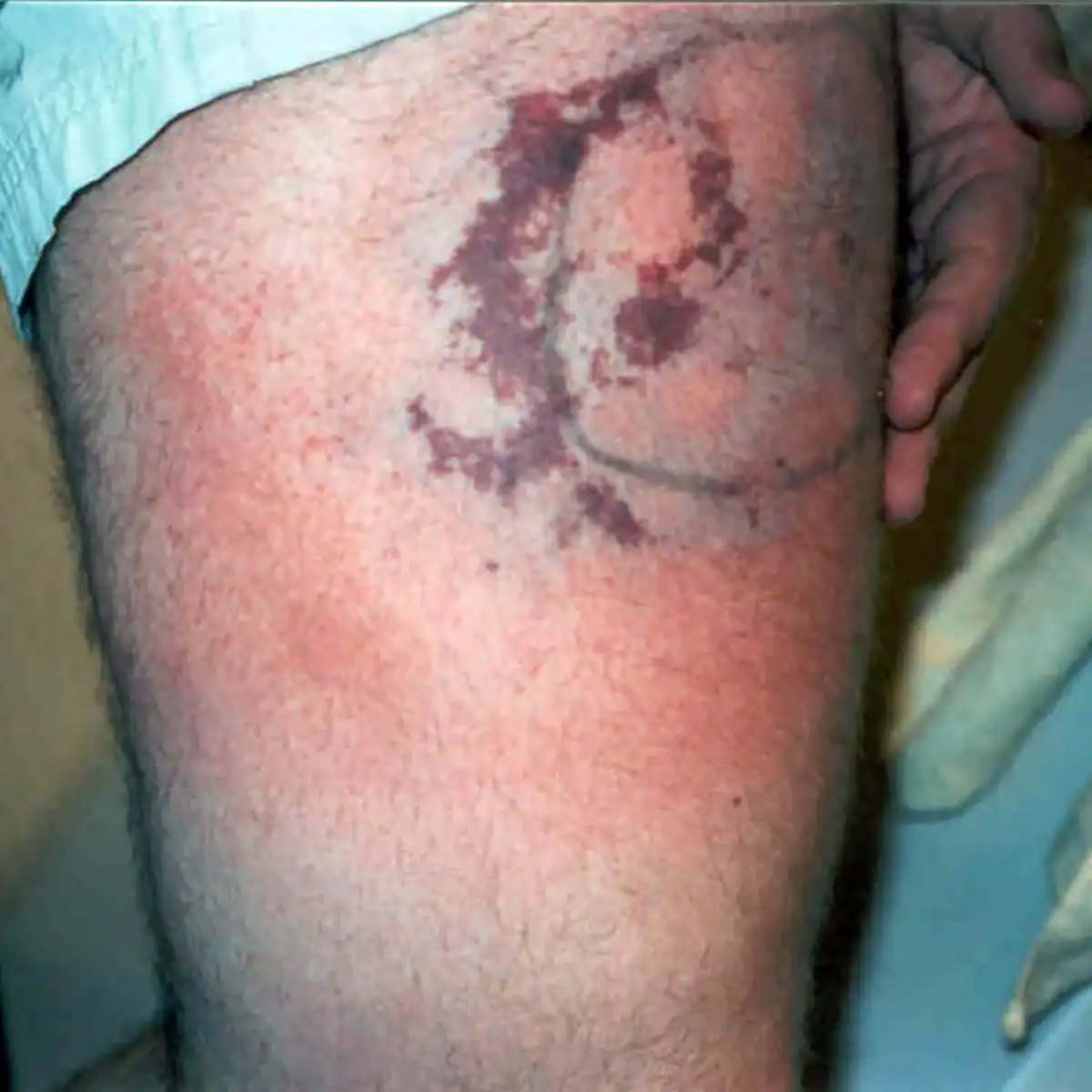
Brown recluse spider bite on leg 1 day after being bitten.
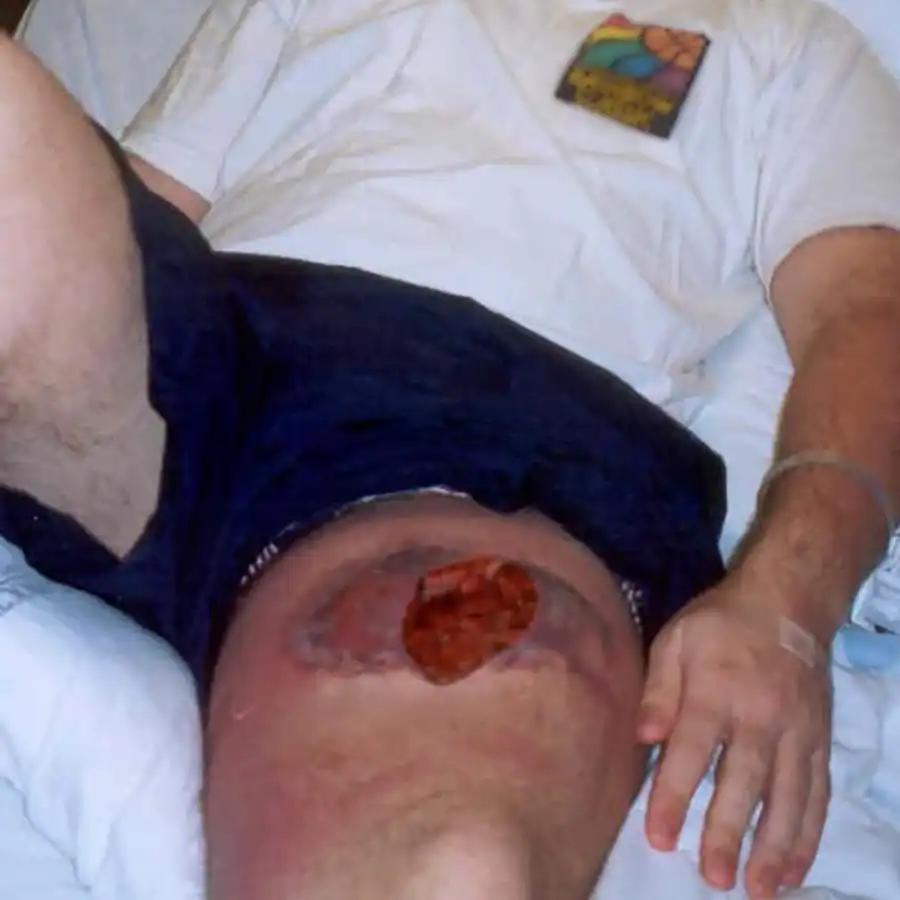
Brown recluse spider bite on leg 3 days after being bitten.
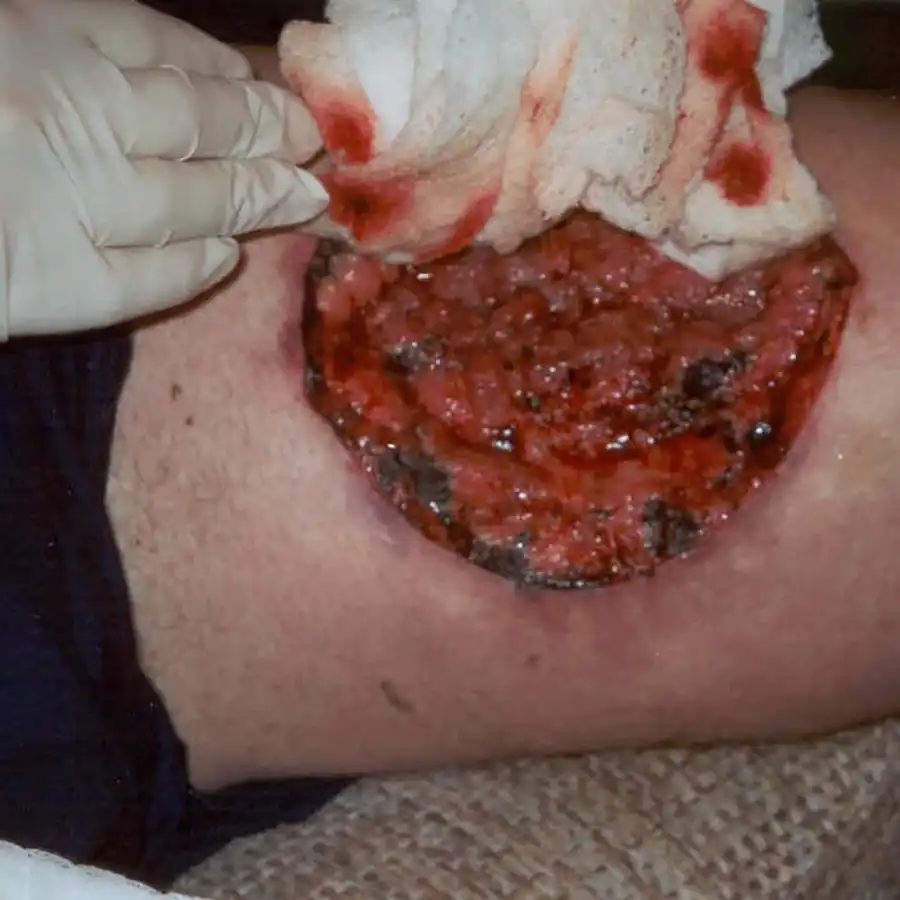
Brown recluse spider bite on leg 9 days after being bitten.
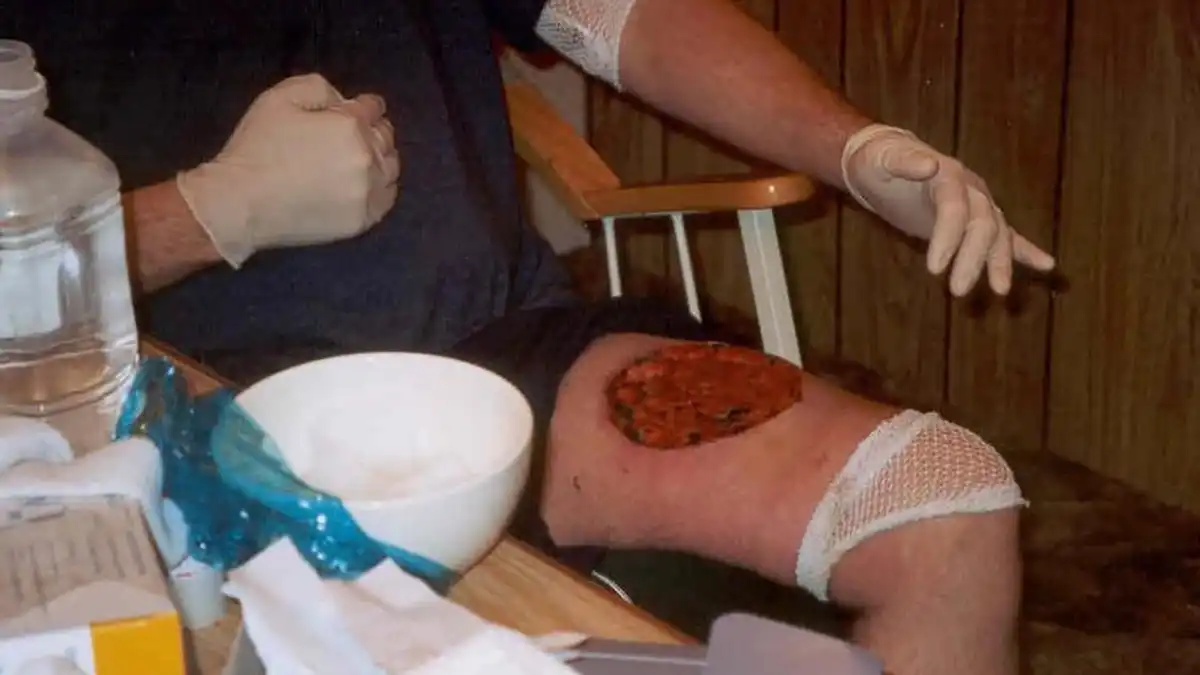
Brown recluse spider bite on leg 11 days after being bitten.
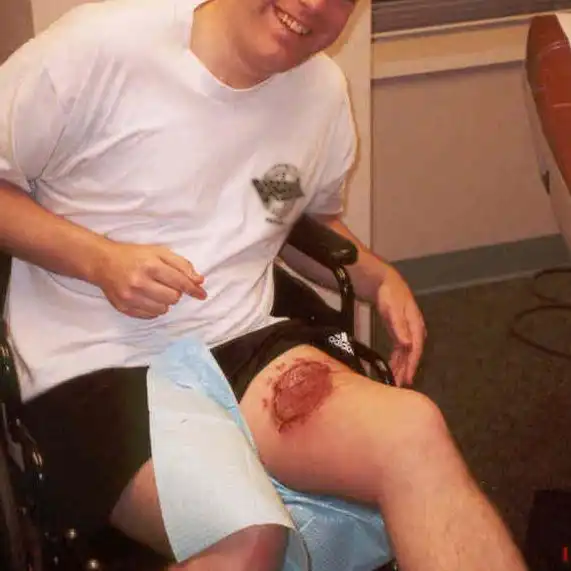
Brown recluse spider bite on leg 38 days after being bitten.
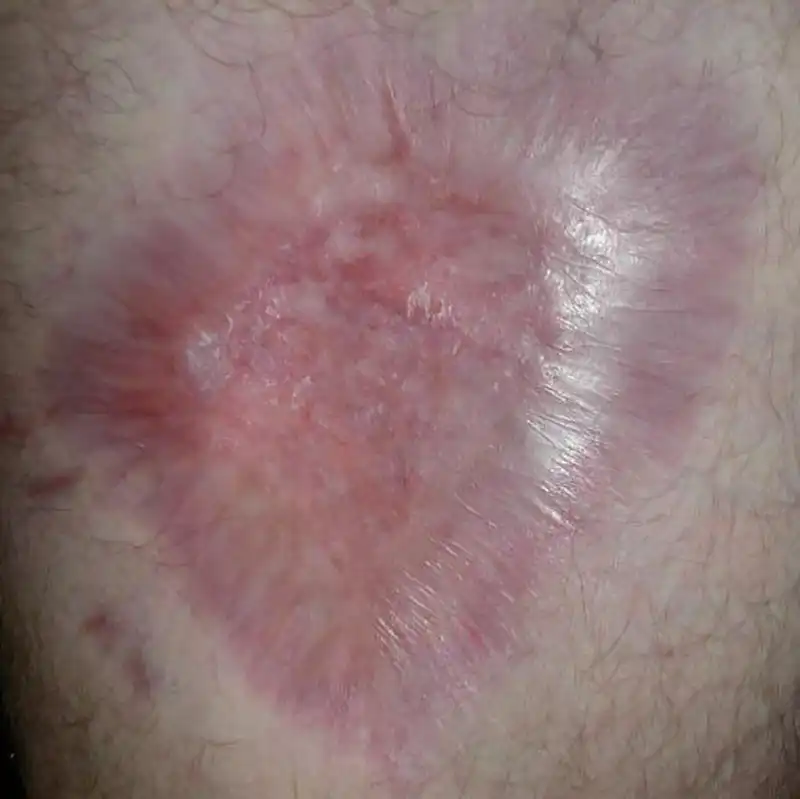
Brown recluse spider bite on leg months after being bitten.
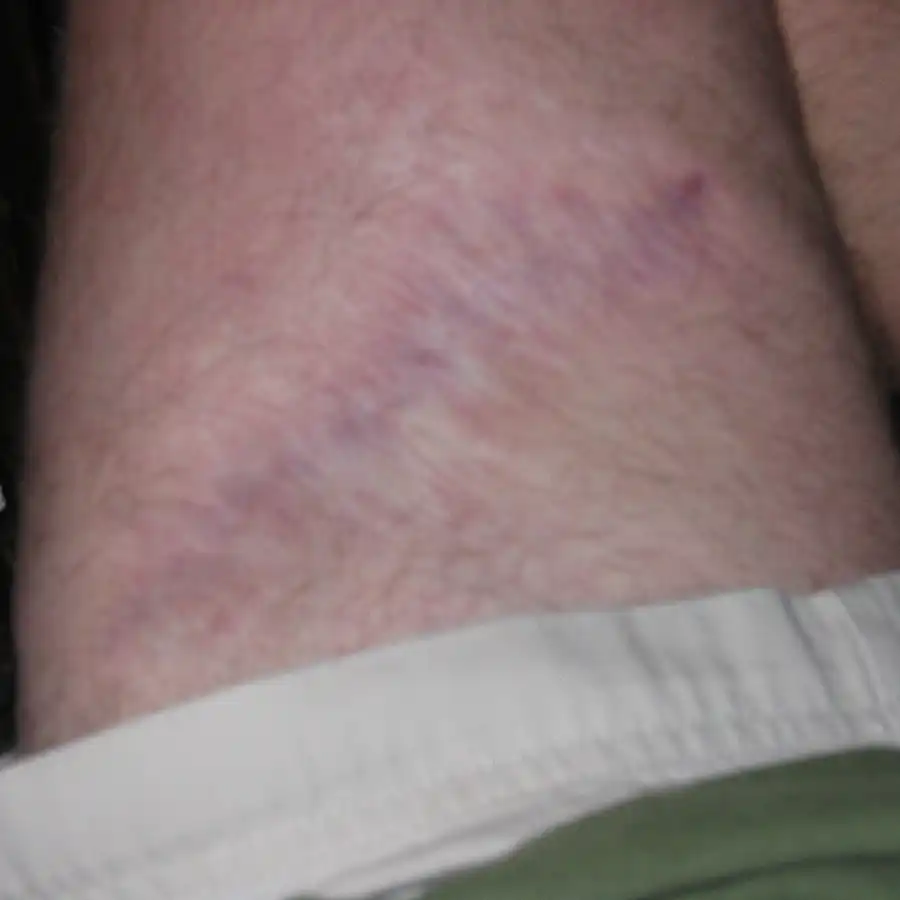
Brown recluse spider bite on leg months after healing.
Brown Recluse Spider Bite Symptoms
The severity of a brown recluse bite depends on the amount of venom injected and how the person’s body reacts. Some people have little or no reaction. Others develop serious wounds that require weeks or months to heal.
Early symptoms that typically appear within 2 to 8 hours of being bitten include:
- A small red mark or white blister at the bite site
- Itching or burning around the bite
- Swelling of the surrounding skin
- Fever, chills, nausea, or vomiting in more serious cases
- Restlessness or difficulty sleeping
As the bite progresses, the affected area may turn blue-gray or blue-white with a sunken, irregular appearance surrounded by redness – sometimes described as a “bull’s-eye” pattern. The tissue at the center can begin to die, forming what is known as a necrotic lesion. This open wound can range from a few centimeters to several inches in diameter and can take 6 to 8 weeks to close completely. Full recovery can take several months. Death from a brown recluse bite is rare but the risk is higher in young children and the elderly.
A Visitor’s Experience: Dale’s Story
The following account was submitted by one of our visitors. It illustrates why early treatment is critical.
I was bitten by a brown recluse spider while lying in bed. The first day I went to the hospital, they gave me an aspirin and told me to go home to sleep the bite away.
The next day I was rushed to the emergency room and told I was a fraction of the time away from losing my leg or my life. After nine days in the hospital, they removed the dead tissue. What I had left was a 12-inch diameter hole in my leg.
After scar revision surgery, the hole reduced in size. The apartment I was in contained around 24 spiders, all of which were brown recluse spiders. When I told the manager, he laughed until he saw my leg and fainted. Even after all that, it took the local Health Department to make him treat for spiders.
The next time I see brown spiders in my apartment, I am packing my bags.
– Dale L.
Brown Recluse Spider Bite Treatment
If you believe you have been bitten by a brown recluse spider, seek medical attention the same day – do not wait for symptoms to worsen. Early treatment produces significantly better outcomes.
When you go:
- Try to photograph the spider from a safe distance rather than attempting to capture it – a photo is sufficient for identification
- Tell the doctor when the bite occurred and describe any symptoms that have developed
- Note the location of the bite and whether the skin appearance has changed since the bite occurred
Depending on the severity, a doctor may prescribe cortisone-type medications to reduce inflammation and address systemic complications such as hemolysis. Additional treatments will depend on how the bite progresses. In serious cases involving significant tissue death, surgical removal of the affected tissue may be necessary.
What Is Necrotic Arachnidism?
Necrotic arachnidism is the medical name for tissue death caused by spider venom. In North America the brown recluse is the main spider that can genuinely cause it, which is why the term and the photos above go hand in hand. Keep in mind that many wounds blamed on spiders turn out to be skin infections like staph or MRSA, which need their own treatment. A doctor can tell the difference.
Reader Reports: Two Hard Cases
Terri: misdiagnosed as gout, then surgery, then healed
Terri felt a bite between her toes on a Sunday night. By Thursday, swollen and feverish, she saw a doctor who diagnosed gout over her objections and prescribed arthritis medicine. Through the weekend the bite blistered, festered, and turned black, and by the next Sunday an emergency room team was removing dead tissue and asking why on earth she had been treating gout. Antibiotics, steroids, and a nerve medication carried her through a painful month, her wound healed without skin grafts, and the first doctor called her at home to apologize.
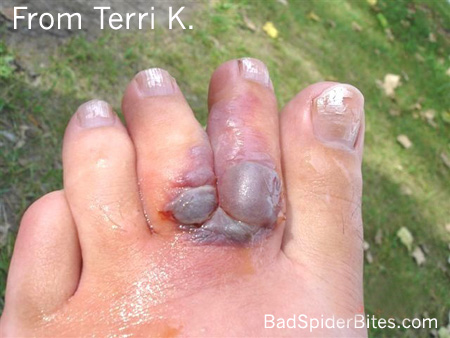
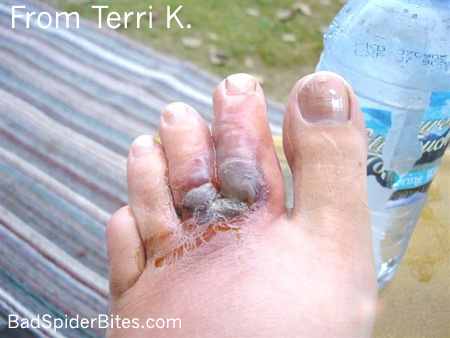
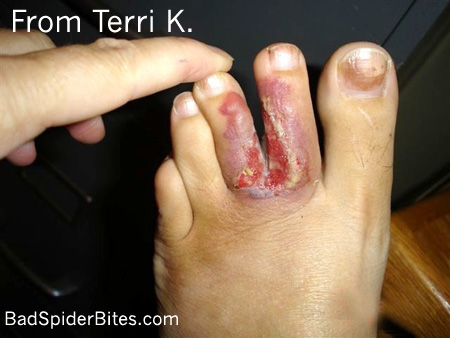
Her story carries two lessons. A wound that keeps getting worse deserves a second opinion, fast. And a recluse bite treated properly, even late, can still heal completely.
SONJA: the wound no test could name
SONJA’s started as unexplained soreness in her breast. A mammogram came back clean, two doctors called it cellulitis, and antibiotics did nothing. Then the sore opened, drained for hours, and turned black at the center, and her plastic surgeon, thirty-two years into his career, told her he had never seen anything like it. Stitches would not hold in the damaged tissue. Emergency surgery removed her implant, cleaned out the wound, and finally stopped it. No culture ever confirmed what it was; she and her surgeon suspect a spider bite and cannot prove it. She kept pushing for answers through five doctor visits, and that persistence is the whole lesson. A wound that keeps eating tissue needs a surgeon, whatever caused it.