Scabies
Scabies is a skin condition that can affect anyone, regardless of age, class, or background. A microscopic mite called Sarcoptes scabiei burrows into the skin, causes considerable damage, and spreads rapidly. If you have never had scabies before, symptoms can take several weeks to appear.
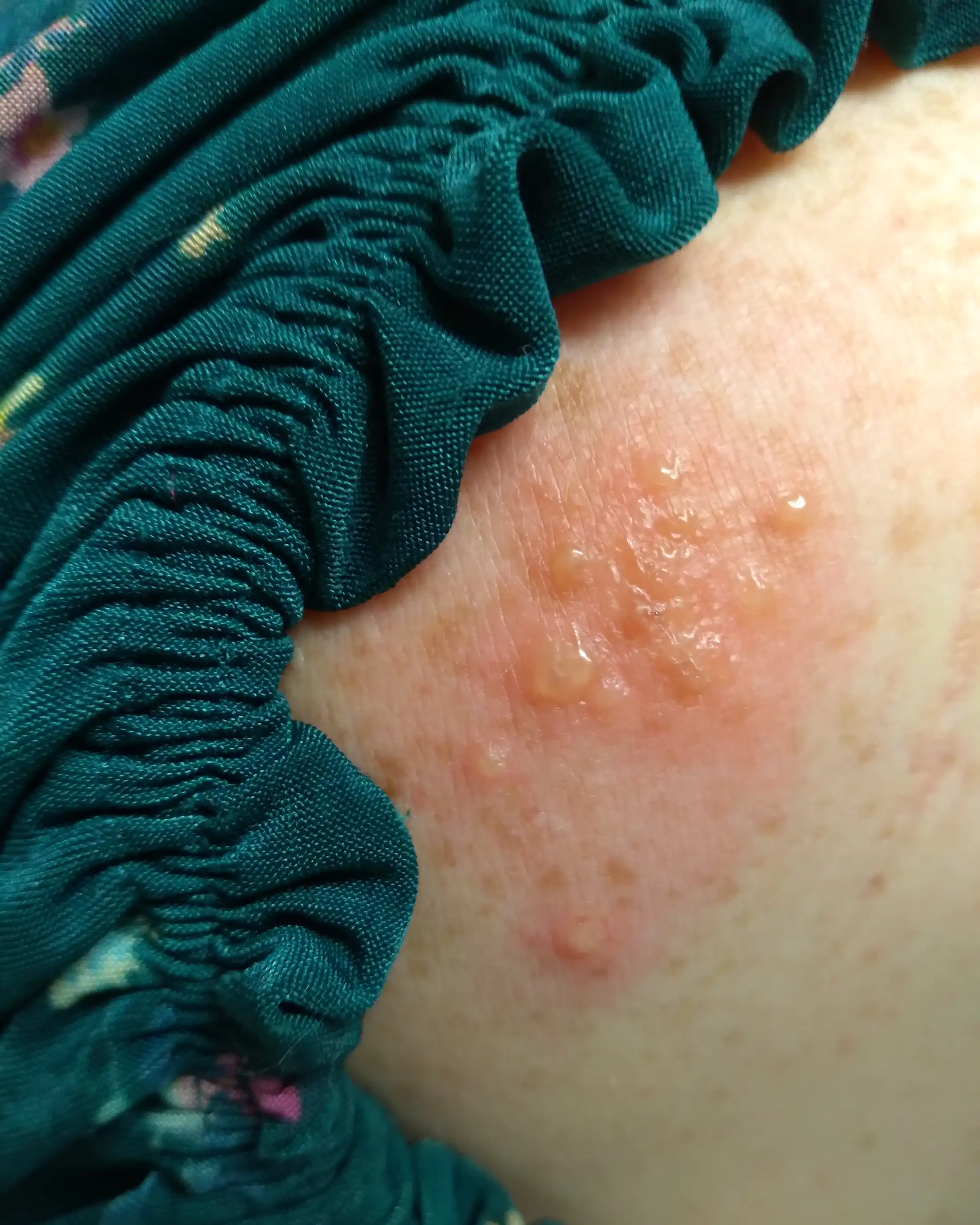
Scabies is shown on the neck of this woman.
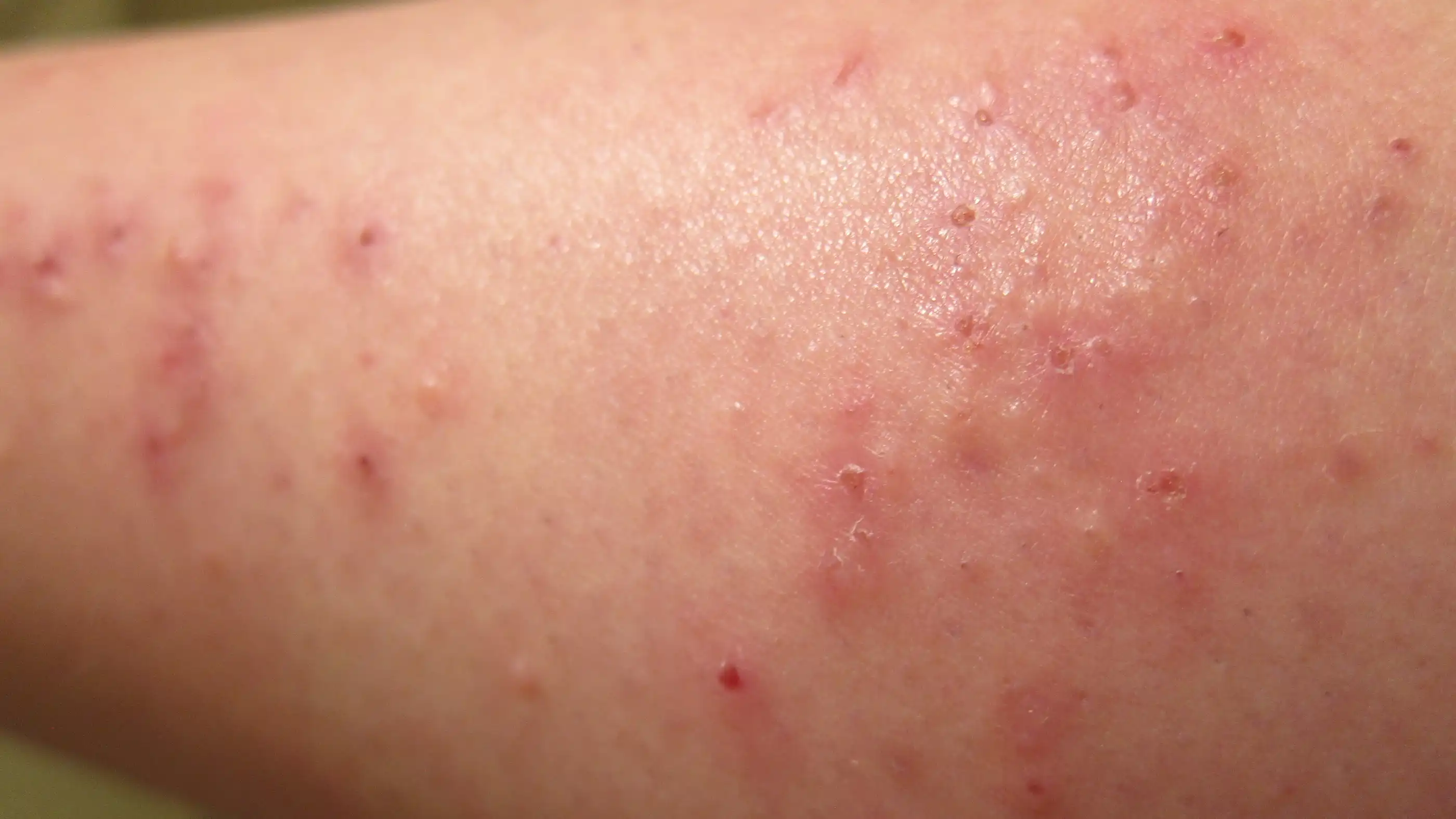
Close up of scabies on the arm showing red blisters.
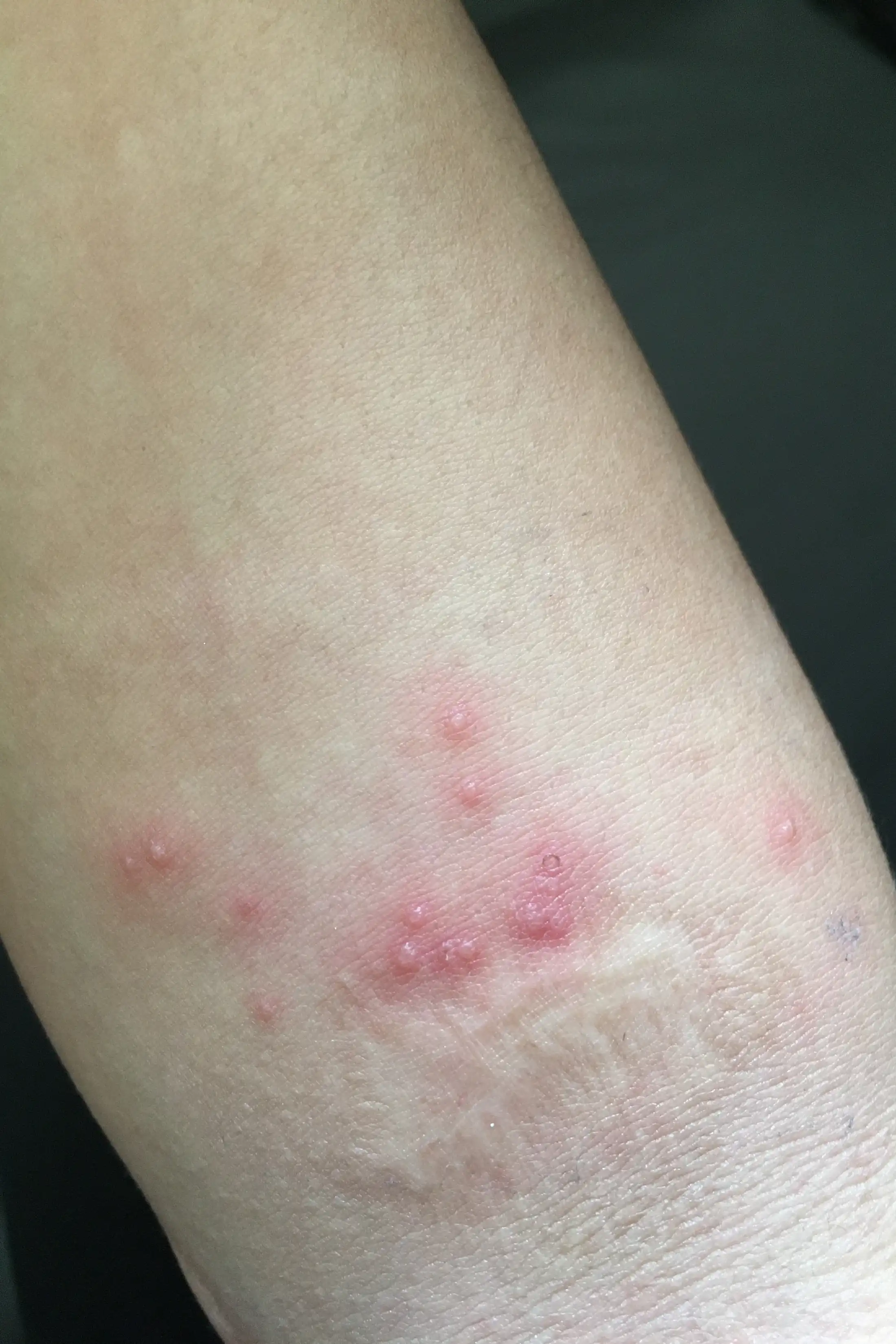
Scabies on the arm with red blisters.
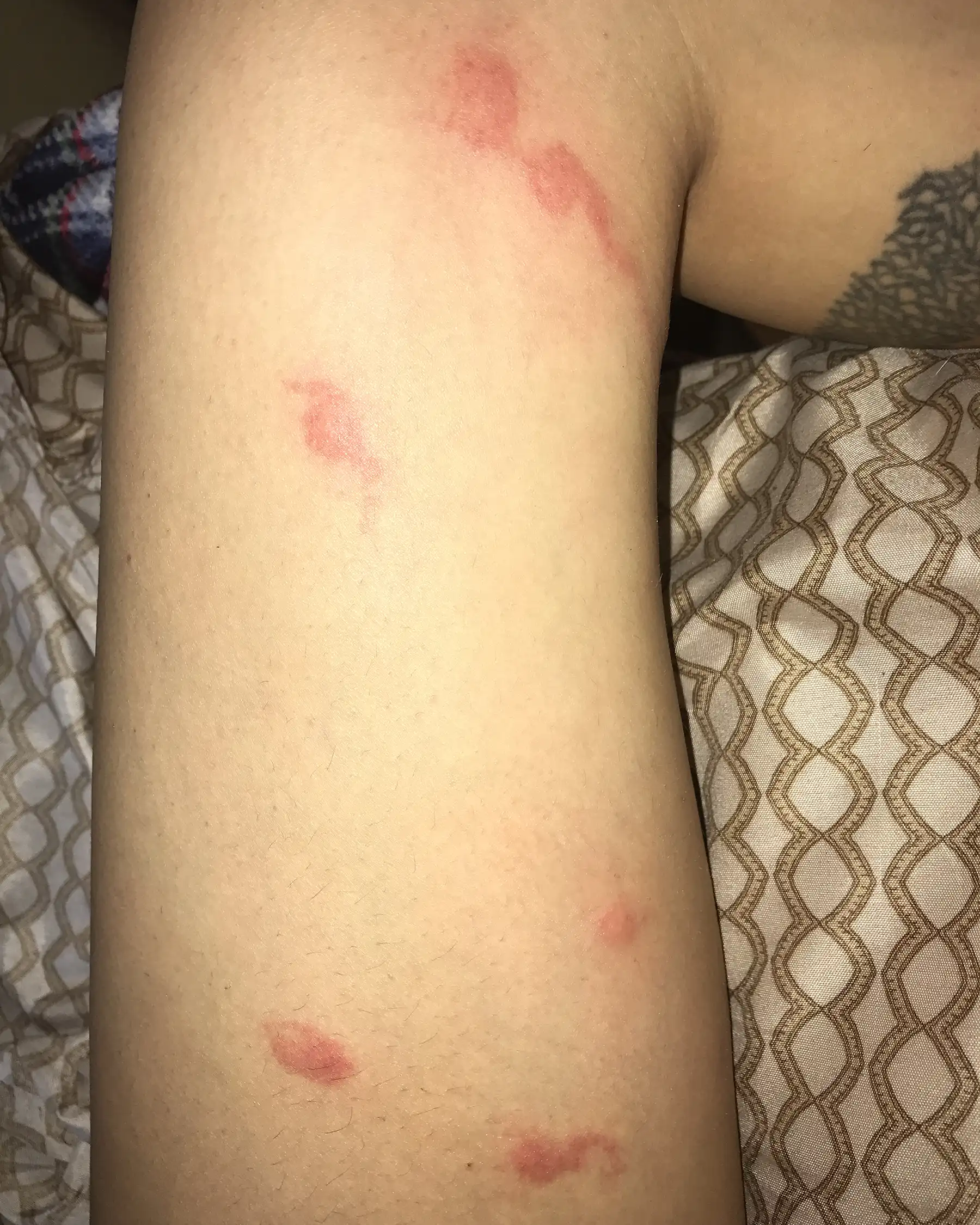
Scabies is shown on this man’s legs in blotches.
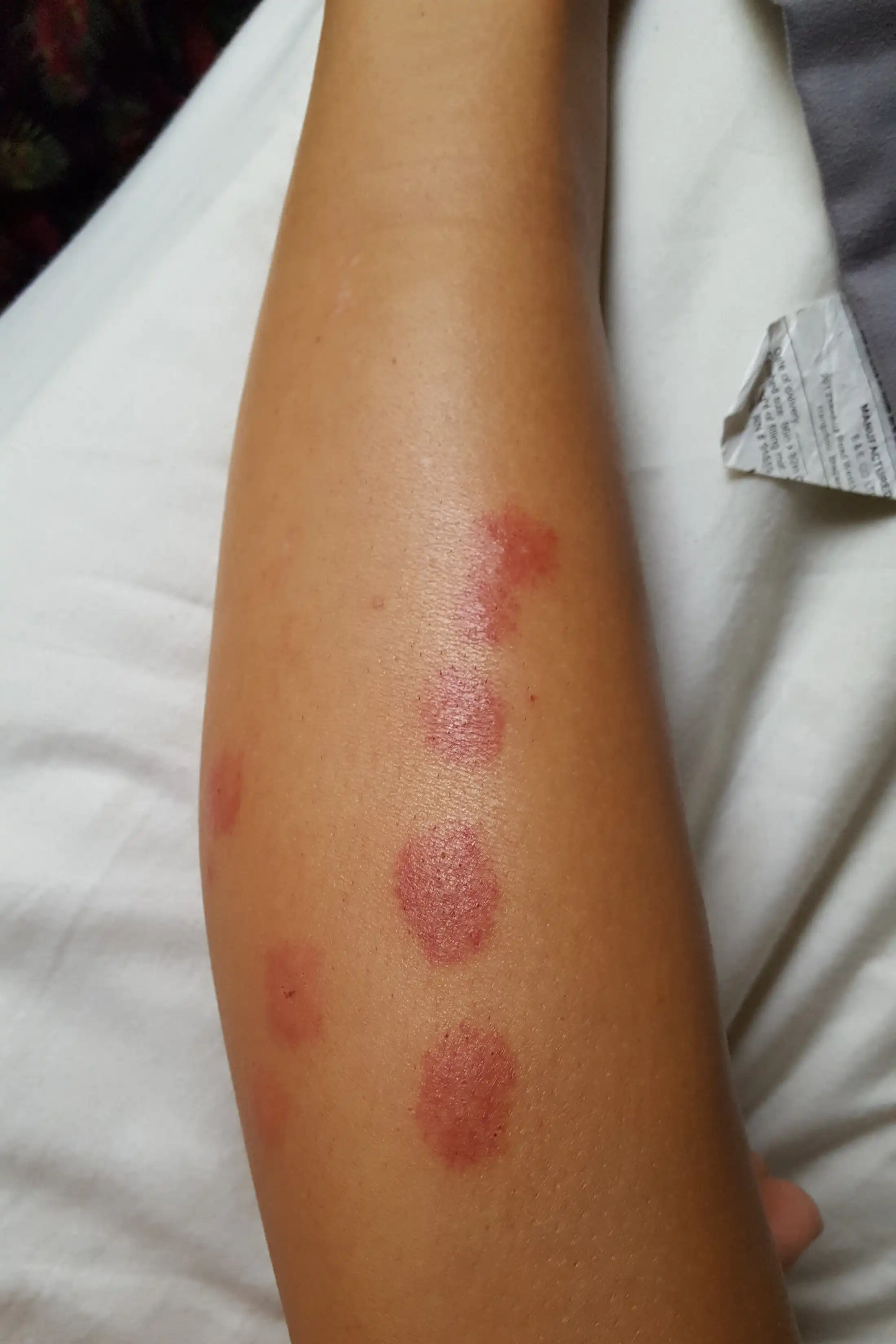
Initial signs of scabies on the arm showing red blotches.
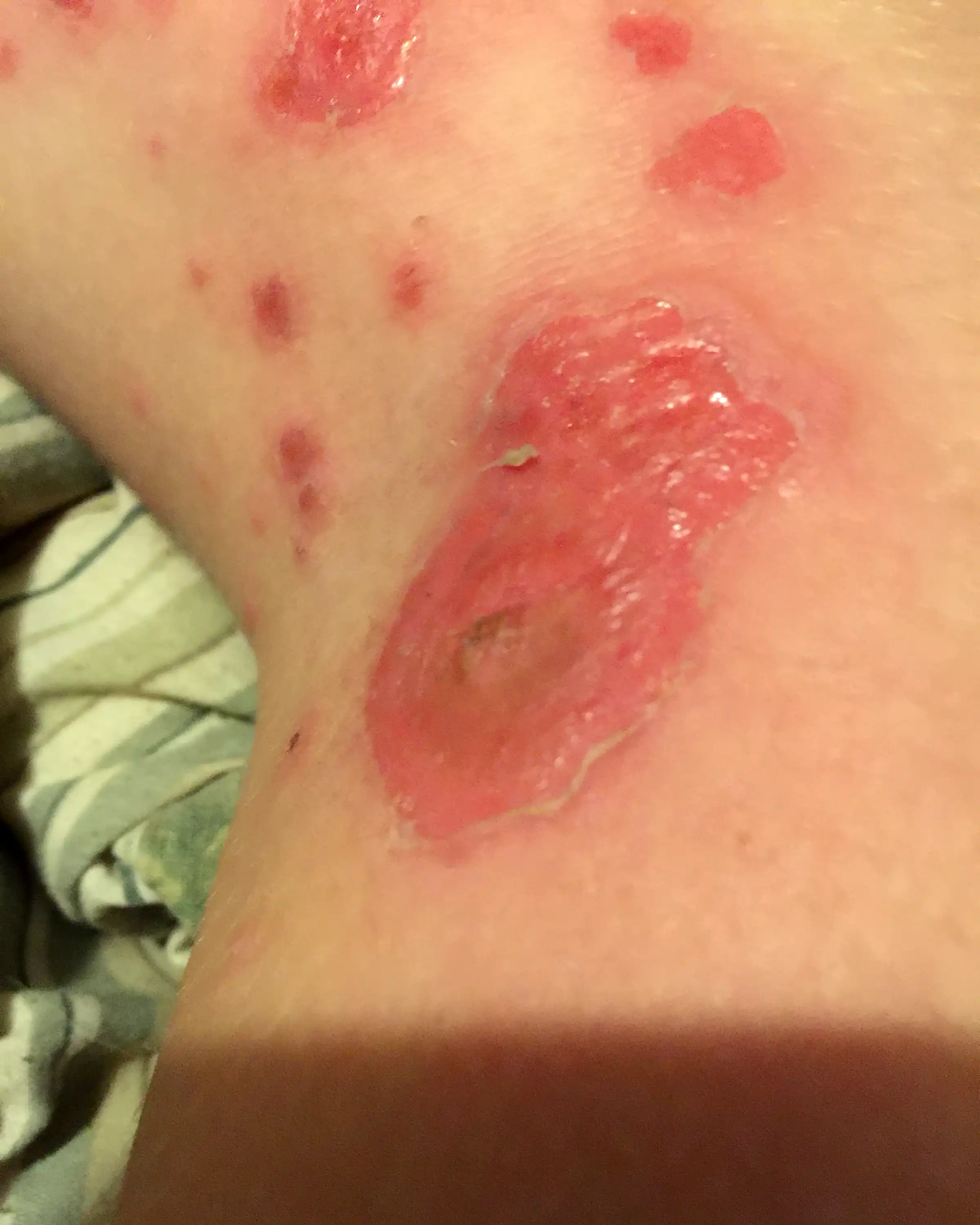
Scabies on the arm shown red and peeling skin.
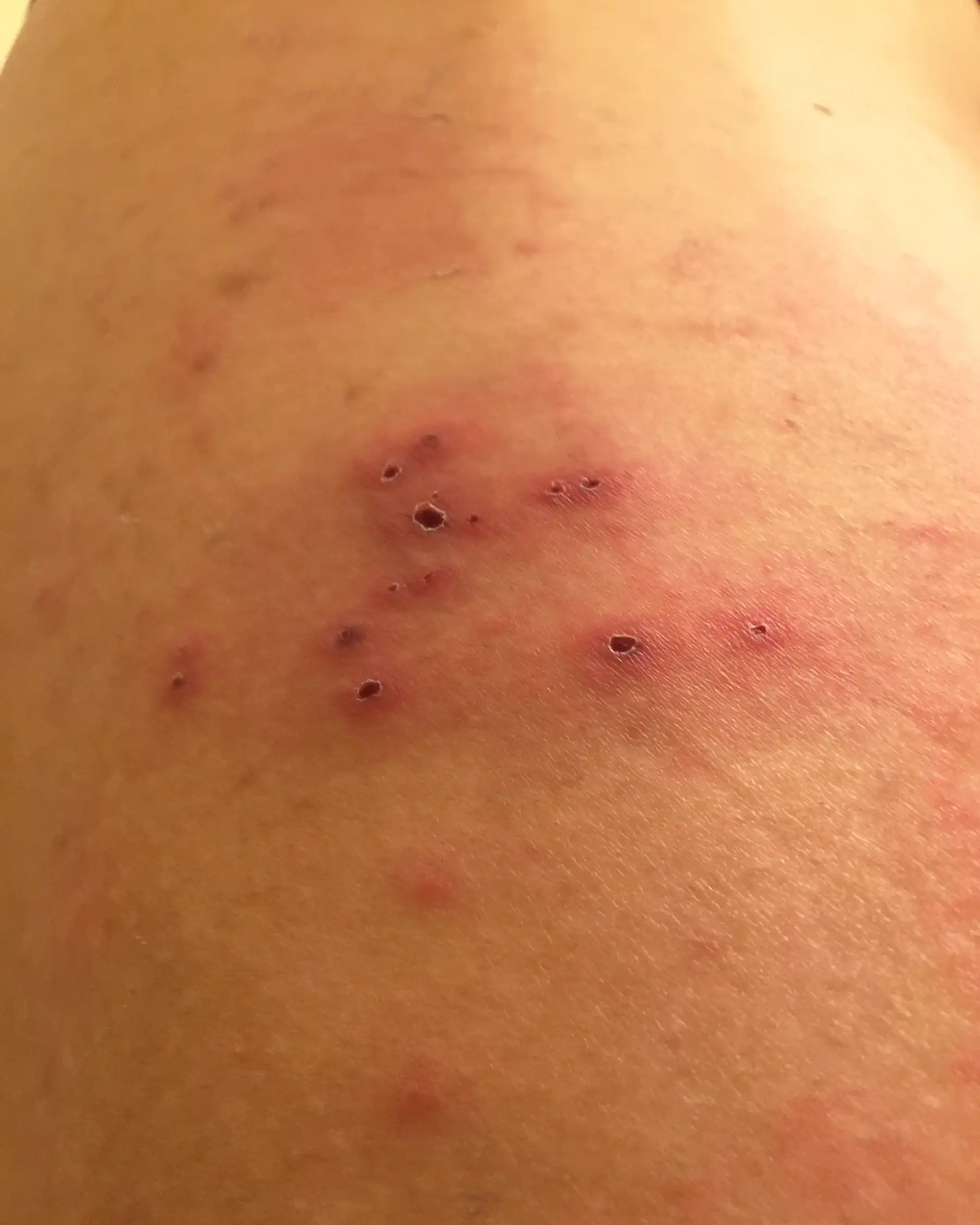
Red scabies bumps on arm some black.
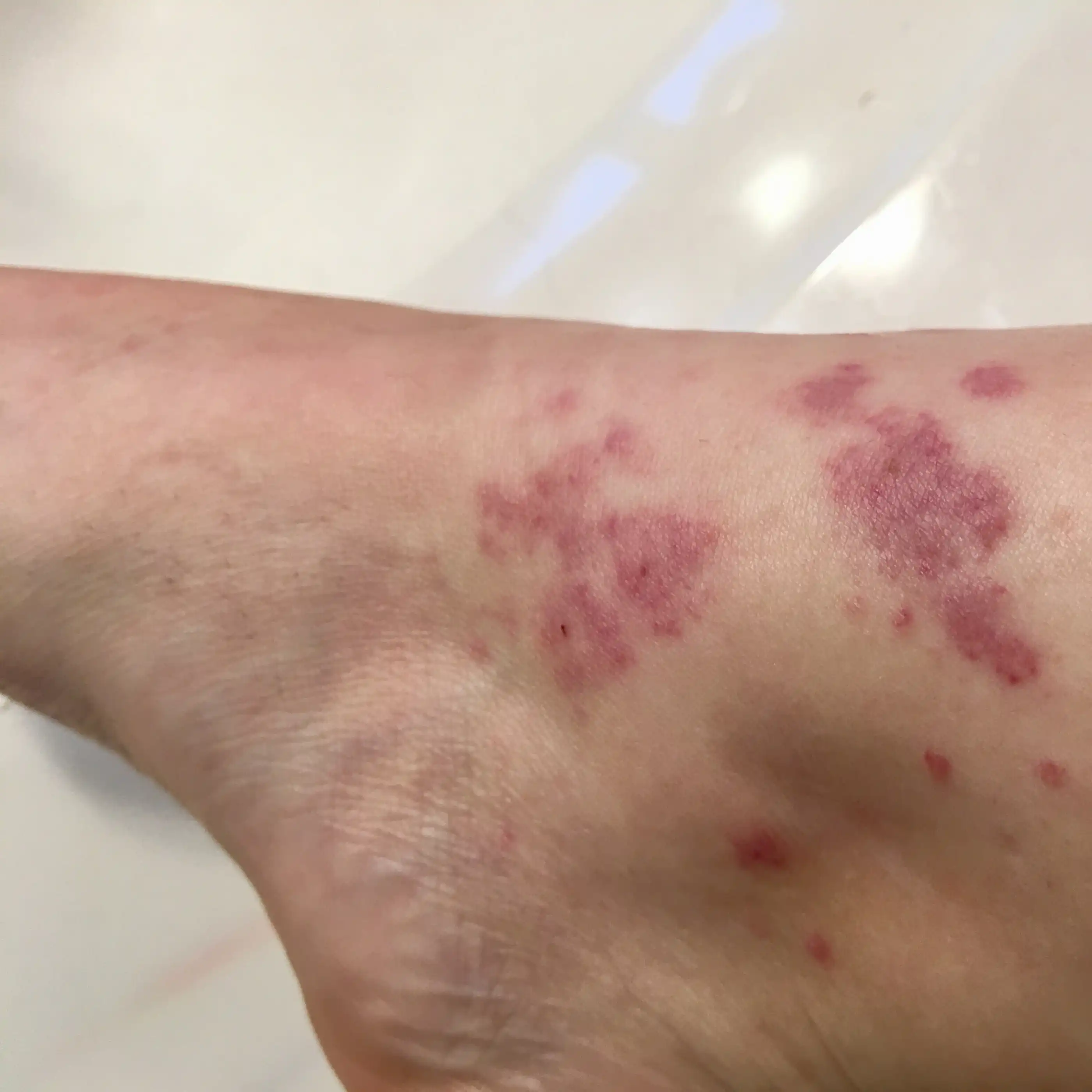
Closeup pictures of scabies shown on foot.
Symptoms of Scabies
Common signs of a scabies infection include irritations that look like pimples, visible burrows under the skin, and a rash. These are most often found between the fingers and in skin folds around the wrist, elbow, and knee. Intense itching, especially at night, is one of the most consistent symptoms and can lead to sores from repeated scratching. Because most infected people carry fewer than ten mites, scraping or biopsy tests can sometimes miss the infestation entirely.
How Do I Get Scabies?
Scabies spreads through prolonged skin-to-skin contact with an infected person. Brief contact like a handshake carries very low risk. Intimate contact and sharing towels or bedding are high-risk situations.
A common misconception is that you can catch scabies from a pet. If your pet has mange, it may be carrying a related mite, but that type of mite will only cause temporary itching, will not burrow or reproduce in human skin, and will die within a few days. It does not spread between people.
Scabies Treatment
There are several prescription lotions used to treat scabies. Always follow your physician’s instructions or the directions on the package insert. Treatment typically involves:
- Make sure your body is clean, apply the lotion from the neck down to the toes, and leave it for about eight hours, followed by a bath or shower.
- Wear only clean clothes, and wash everything you have used in hot water and dry in a hot dryer.
- You will usually do a second treatment with the same scabies lotion a week later.
- There are milder scabies medications if you are pregnant or treating a child.