Banana Spiders: Two Very Different Spiders Share One Name
The name banana spider causes real confusion, because people use it for two spiders that could hardly be more different. One is among the most venomous spiders on earth. The other is a big, showy web-builder that is close to harmless. Knowing which one you are looking at matters.
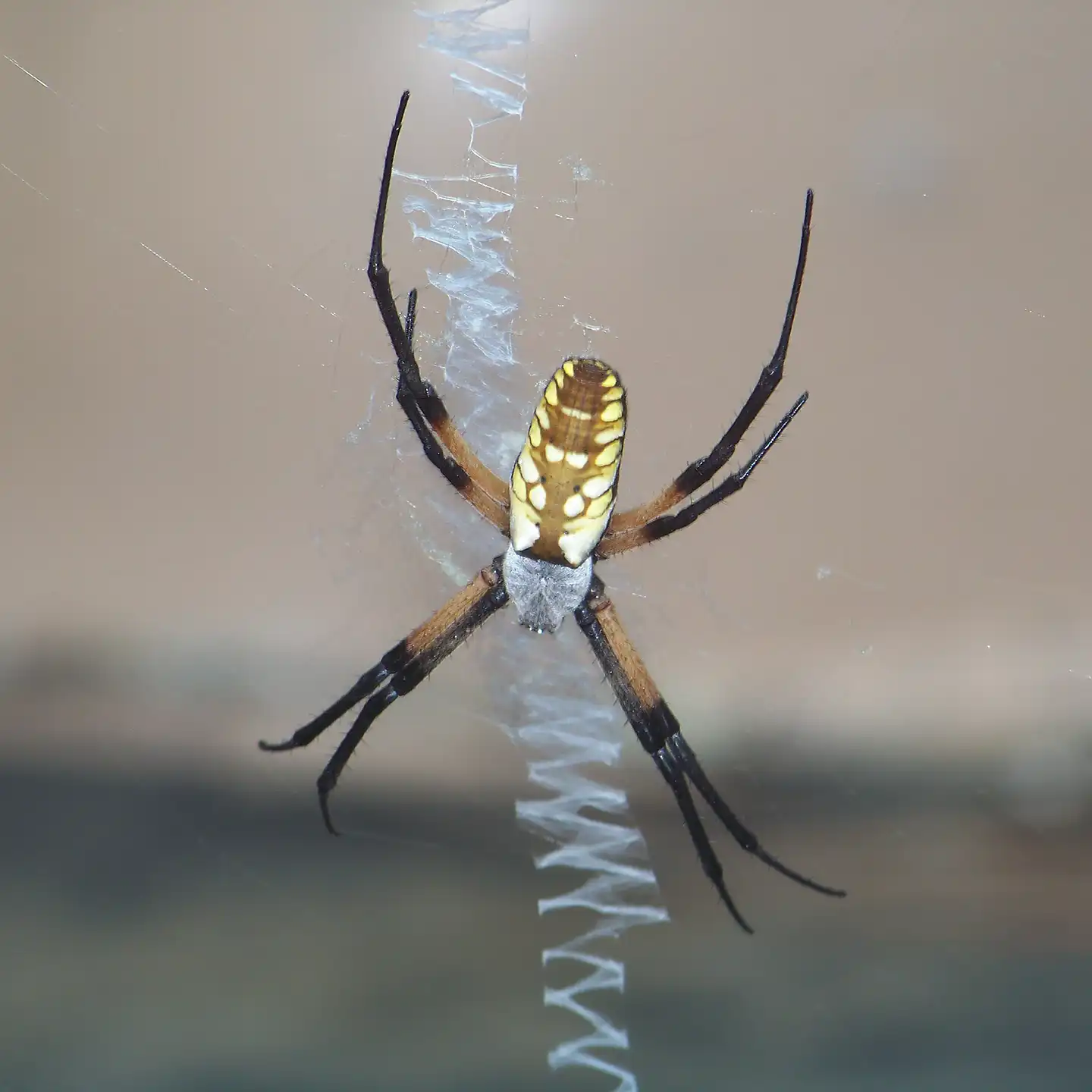
The Brazilian Wandering Spider
The first banana spider is the Brazilian wandering spider (Phoneutria), sometimes called the armed spider. It picked up the banana name by turning up in shipped banana bunches. Wandering spiders live in Central and South America and hunt on foot at night instead of building webs. By day they hide in dark, damp places, including banana trees and plants.
This is the banana spider to take seriously. Its venom is a strong neurotoxin, and a bite can make an adult very sick. With legs included, a large one can span about 5 inches. Bites outside its native range are rare. If a large spider reared up on its back legs before striking you, treat the bite as an emergency and get medical help right away.
The Golden Silk Orb-Weaver
The banana spider most people in the United States actually see is the golden silk orb-weaver (Nephila). It gets the name from its long yellow body and the golden sheen of its silk. Females are giants as orb-weavers go; with legs included, a big one can stretch wider than your palm. Males are a fraction of that size.
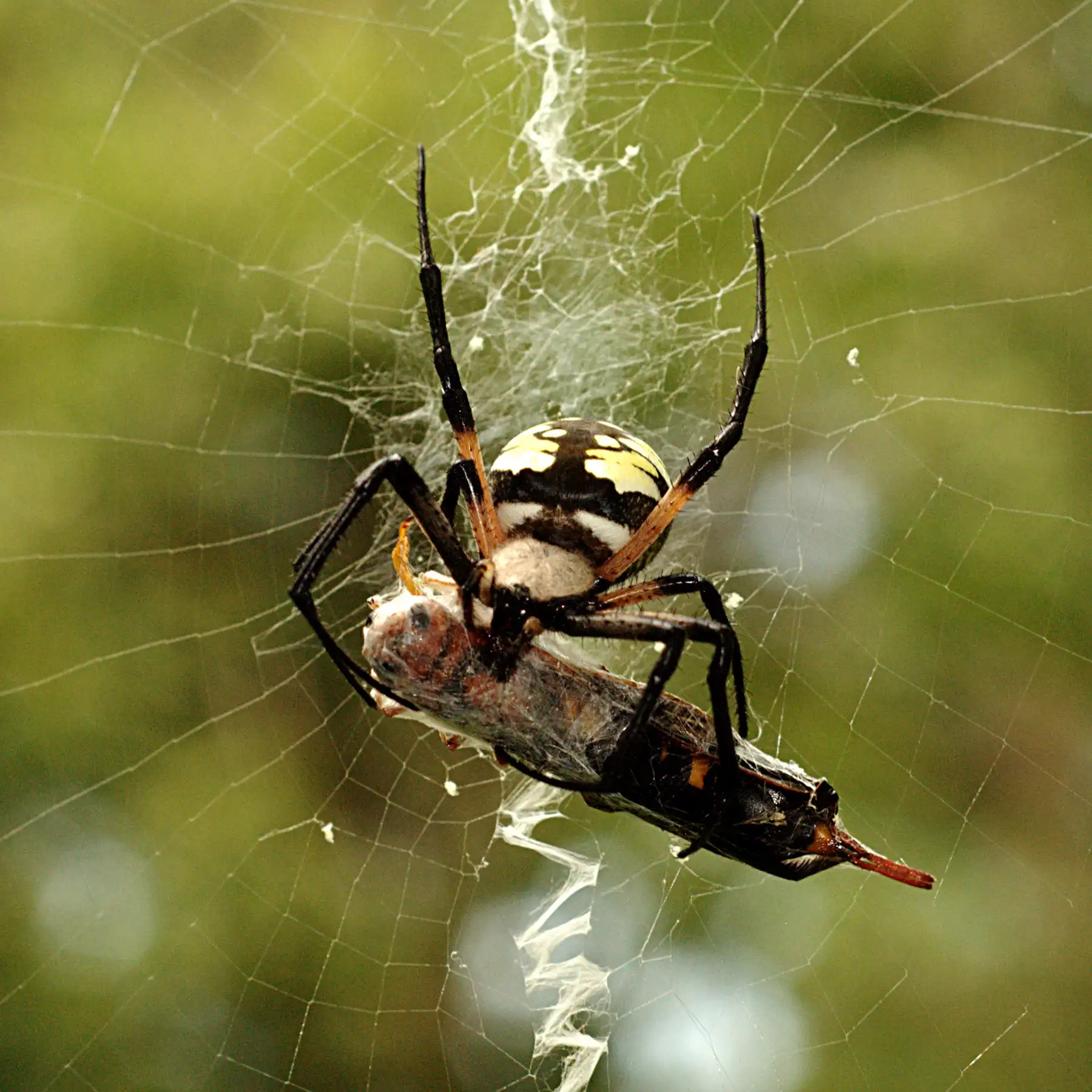
Golden silk orb-weavers build large wheel-shaped webs in warm regions around the world, including the southeastern United States, often strung at face height between trees and shrubs. Their silk is remarkable, stronger by weight than a steel strand of the same thickness, and researchers study it for use in medicine and new materials.
Walking into one of those webs is startling, but the spider wants nothing to do with you. It bites only if pinched or held against skin, and for most people the bite is milder than a bee sting: brief local pain, a little redness, and it fades.
Which One Did You See?
In the United States, a large yellow-and-brown spider sitting in a big wheel web is almost always a golden silk orb-weaver. Leave the web where it is if you can. The spider spends all season eating mosquitoes and flies.
Wandering spiders do not sit in webs. A heavy-bodied spider found hunting on the ground or hiding in shipped goods, one that raises its front legs when disturbed, deserves real caution.
If you were bitten and the pain spreads, or you notice sweating, cramping, or trouble breathing, do not wait it out. See our spider bite treatment page and get medical help.