Wolf Spider Bite: Symptoms, Treatment & Identification
The wolf spider is one of the most commonly encountered spiders in the United States. Despite its large, intimidating appearance, it is not considered dangerous to healthy adults. There are around 125 species found in the United States and about 50 species found in Europe.
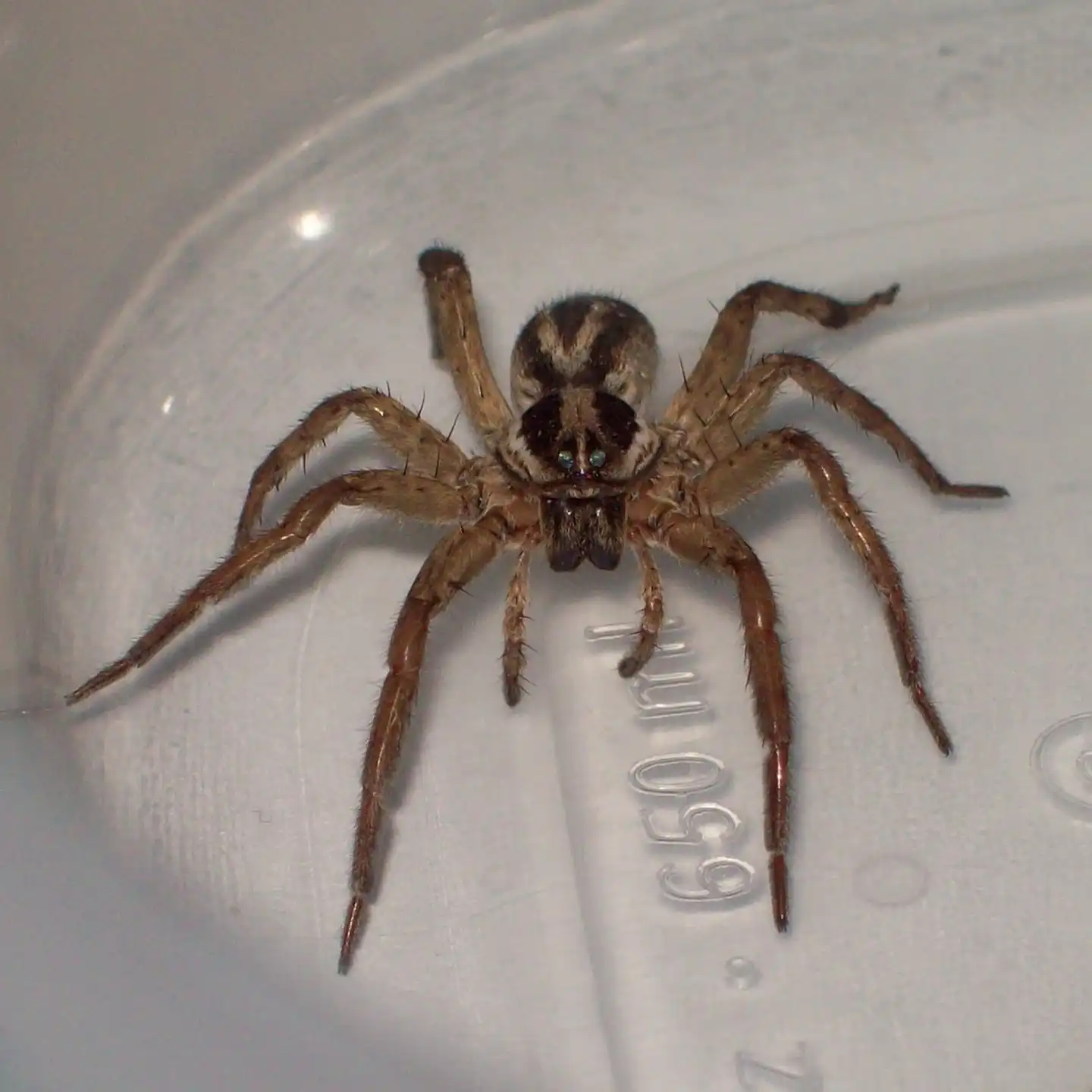
How to Identify a Wolf Spider
A full grown wolf spider is typically half an inch to two inches long. They are usually brown or gray with stripe-like markings on their backs, sometimes referred to as Union Jack impressions. They are noticeably hairy, which often leads to them being mistaken for tarantulas.
The eye arrangement of the wolf spider is one of its most distinctive features. They have eight eyes arranged in three rows – four small eyes in the bottom row, two large eyes in the middle row, and two medium eyes on top. The large middle eyes give wolf spiders excellent vision, which they rely on for hunting.
Wolf spiders do not build webs. They hunt actively on the ground, both day and night, pursuing prey rather than waiting for it. They dig burrows under rocks or in soil, often covering the entrance with leaves or grass. They are fast-moving and will usually run away from humans when disturbed rather than stand their ground.
Wolf spiders are commonly found indoors at the beginning of fall when they seek warmer shelter for winter.
The mother wolf spider carries her egg sac attached to her body. After hatching, the spiderlings ride on their mother’s back until they are partially grown – a behavior unique among spiders found in the US.
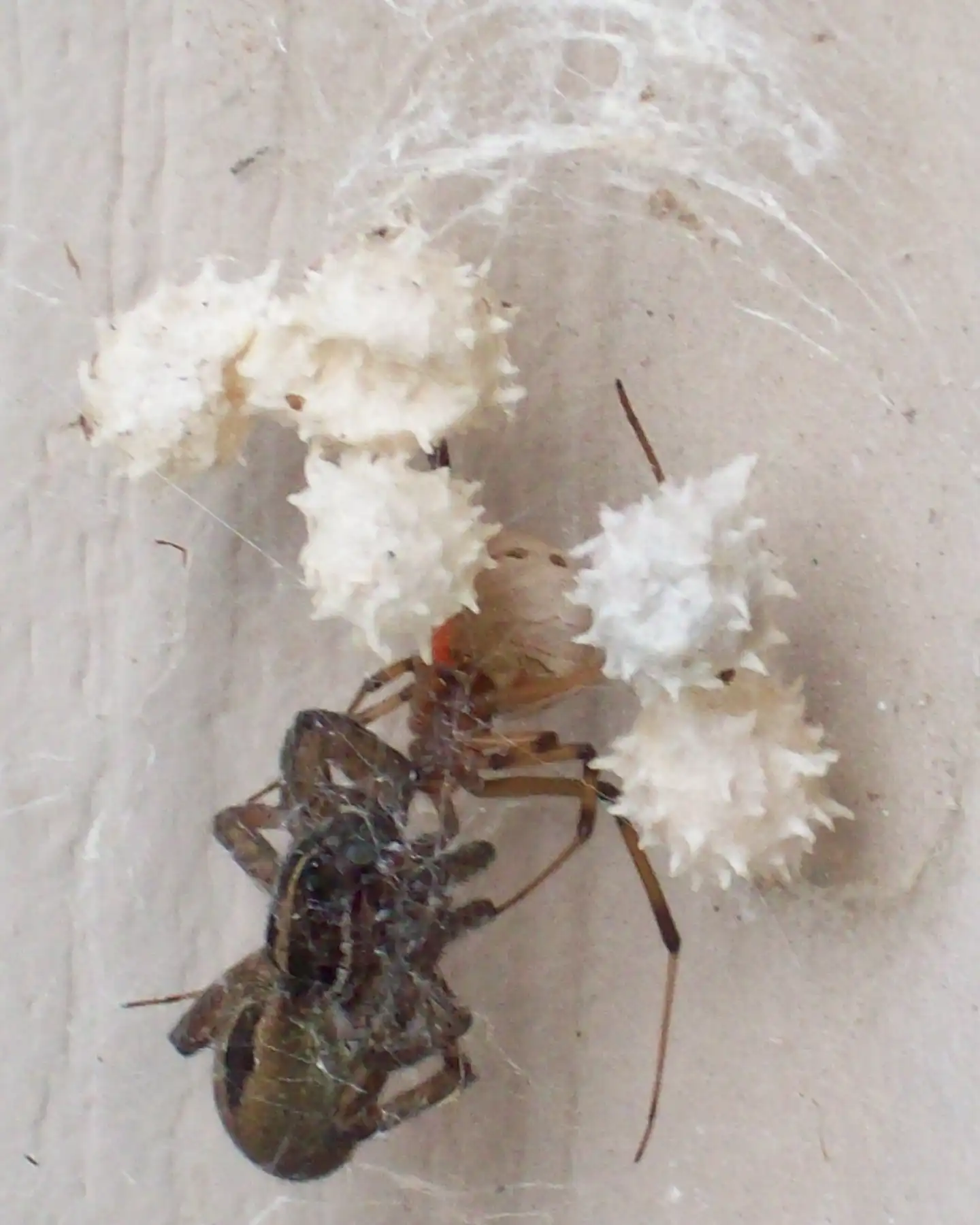
The image above shows a wolf spider that was caught and killed by a brown widow spider.
Wolf Spider vs Brown Recluse – How to Tell Them Apart
Wolf spiders are frequently misidentified as brown recluse spiders, which can cause unnecessary alarm. Here is how to tell them apart:
- Wolf spiders are larger and hairier than brown recluse spiders
- Brown recluse spiders have a distinctive violin-shaped marking on their back – wolf spiders do not
- Brown recluse spiders have six eyes arranged in pairs – wolf spiders have eight eyes arranged in three rows
- Wolf spiders move quickly in the open – brown recluse spiders prefer to stay hidden in dark, undisturbed areas
If you are unsure whether you are looking at a wolf spider or a brown recluse, see our brown recluse identification guide. You can also compare more wolf spider photos in our spider picture gallery.
Wolf Spider Bite Symptoms
Wolf spiders are venomous but their venom is not considered dangerous to healthy adults. They are not aggressive and will bite only if they feel directly threatened or are handled.
A wolf spider bite typically causes:
- Pain and redness at the bite site
- Swelling around the bite
- Itching that may persist for several days
- Mild swollen lymph nodes in some cases
Serious complications from wolf spider bites are rare. However, people with allergies or compromised immune systems may have stronger reactions. If symptoms worsen after the first few hours, seek medical attention.
Wolf Spider Bite Treatment
- Wash the bite site thoroughly with soap and water
- Apply an ice pack wrapped in a cloth to reduce swelling – do not apply ice directly to skin
- Do not bandage the wound tightly
- Take an over-the-counter pain reliever such as ibuprofen or acetaminophen if needed
- Avoid moving the affected limb excessively if swelling is significant
- Seek medical attention if symptoms worsen, if a red line develops from the bite site, or if you are unsure what bit you
Reader Reports: Wolf Spider Encounters
Wolf spiders scare people out of proportion to their bite. These three reader accounts show the realistic range: a mild bite handled sensibly, an infected one that needed a doctor, and a four-year-old’s pet.
Marie: a bite at the cabin
Marie woke to itching inside her elbow at a river cabin where wolf spiders are everywhere, and found two red bumps in a patch of redness the size of a silver dollar. An antihistamine calmed it overnight, and her doctor confirmed a spider bite, updated her tetanus shot, and told her exactly what to watch for: a red line moving up the arm, heat, or fever, all signs of infection rather than venom. The spot faded to a suntanned-looking patch within days.
Tammy: the bite that got infected
Tammy’s husband took what was probably a wolf spider bite on the arm. The wound refused to heal on its own and had to be drained and packed at the doctor’s office for weeks. The doctor’s explanation stuck with her: the venom is not the danger to people, but spider fangs can carry bacteria, and it is the resulting skin infection, like staph, that does the damage. When a jumping spider later left a half-dollar welt on her daughter’s arm, she washed it, used antibiotic cream, and it healed quickly.
Mary and Ginger
Mary caught a big wolf spider in a jar to keep it away from her kids, and her four-year-old promptly named it Ginger. It has lived in a vented critter keeper ever since, eating crickets and drinking from a bottle-cap water dish like a tiny dog. They plan to release her when the weather warms. One thing Mary learned: wolf spiders found dead in garages usually died of thirst, not old age. Her rule is the right one: watch all you want, never handle.
If you believe you have been bitten by a wolf spider and are experiencing severe symptoms, seek medical attention immediately.