Silver Orb Spider: Bite and Identification Facts
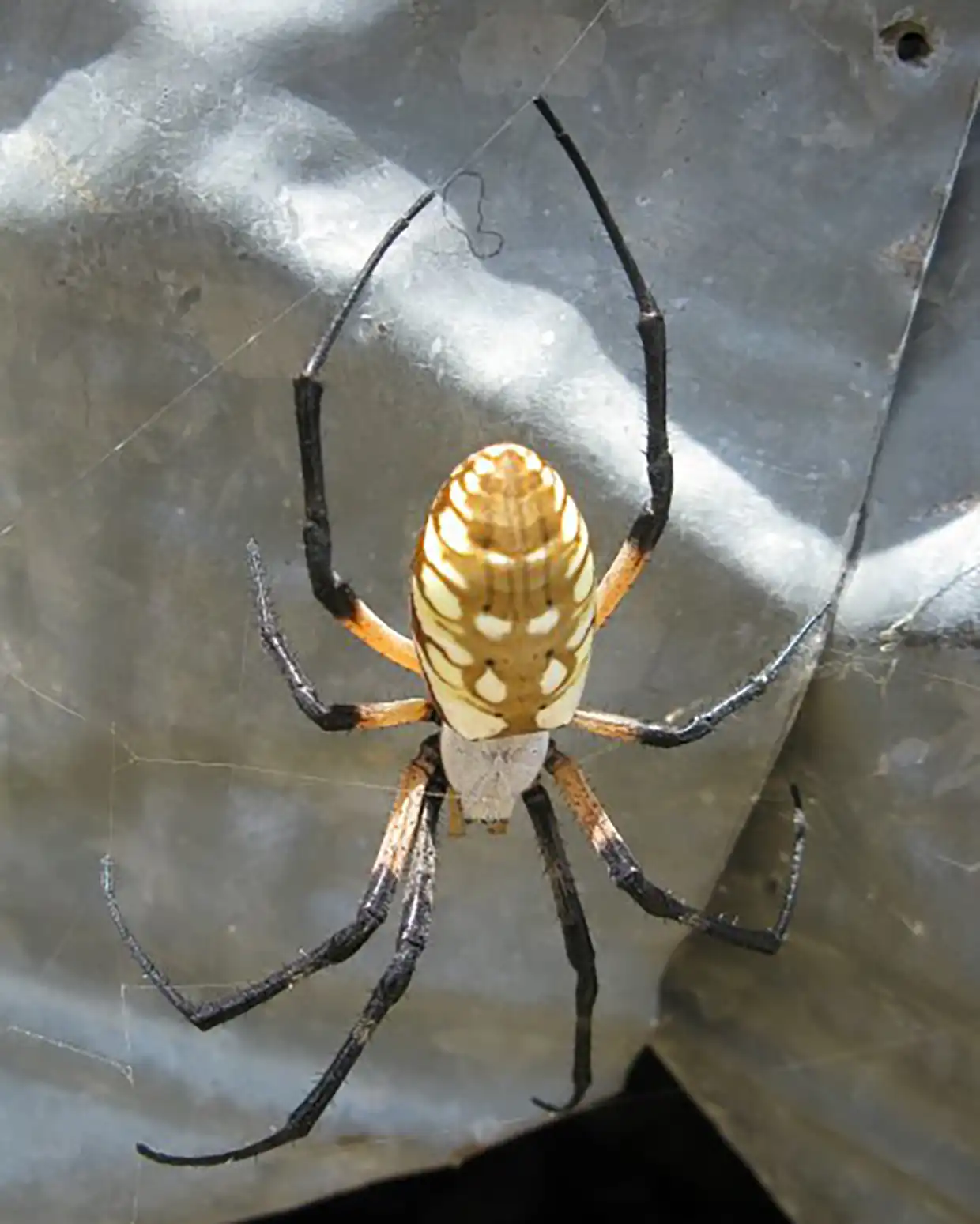 The silver orb spider is a long-legged web builder from the family Tetragnathidae, best known for the bright silver shine of its abdomen. People searching for a silver spider or a silverback spider have usually found one of these. They are common along the east coast of Australia and in other warm, wet places, especially near water.
How to Identify a Silver Orb Spider
The abdomen is oval and bright silver with black markings, and the long legs and head range from yellow-green to dark green. Body length is around 10 millimeters, small enough that the silver shine is often what catches your eye first. Males look similar but are about half the size, with longer legs, and are seen far less often. The silver color is camouflage. Seen from below, the silver belly blends into the bright sky. Seen from above, the darker green and yellow patterns blend into the plants underneath. Fish use the same trick: dark on top, silvery underneath.
The Web
Silver orb spiders build their orb webs tilted or fully horizontal, which is unusual among orb weavers, and it is why some people call them horizontal orb spiders. The webs hang above shrubs or water, often a meter or more off the ground, and the flat layout is perfect for catching insects that fly up from ponds and creeks. The spider hangs beneath the center of the web, day and night, and crosses it quickly to wrap whatever lands.
Silver Orb Spider Bite
Little formal research exists on silver orb spider venom, and these spiders are not considered dangerous to people. Bites are rare and usually happen the way one of our readers described: he walked face first into a web in his yard, brushed at it, and picked up several pin-prick bites near his eyebrow. In his case the bites began to sting about 12 hours later, swelled over the next day until his eyelid closed, and turned into small open sores. His doctor found a skin infection below the surface and treated it with antibiotics and a numbing cream. The swelling settled within a few days, the sores scabbed over, and the scarring slowly healed. The lesson from his account is not that silver orb spiders are dangerous. It is that any bite near the eye that swells or forms open sores deserves a doctor visit, because infection, not venom, is usually the real problem. Our spider bite treatment page covers the warning signs. Thank you to Halden for sharing his experience.