Black Widow Spider Bite: Symptoms, ID & Treatment
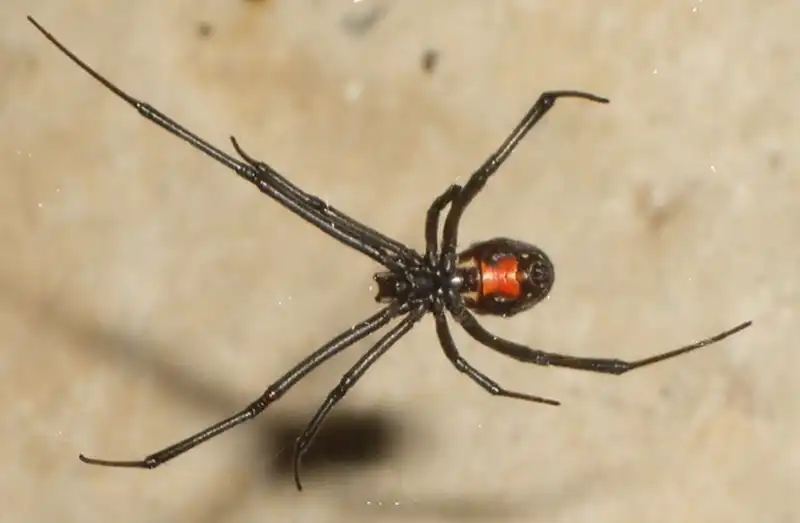
The black widow spider is one of the most venomous spiders in North America. There are about 31 species worldwide, but the one most commonly encountered in the United States is the Southern black widow, known scientifically as Latrodectus mactans. Black widows are not aggressive – they bite only when threatened or trapped against skin.
How to Identify a Black Widow Spider
Black widows are most recognizable by the red hourglass-shaped marking on the underside of their abdomen, but identification is not always straightforward:
- Not all black widows display a complete hourglass – some have a broken hourglass shape or just a few red dots
- Not all black widows are black – some are brown or have a slight purple sheen
- Only the female carries dangerous venom – males are much smaller and are not considered a threat to humans
- They prefer dark, sheltered locations such as under rocks, in woodpiles, garages, sheds, and outdoor furniture
Black Widow Spider Venom
Black widow venom is a neurotoxin, meaning it affects the nervous system rather than destroying tissue the way brown recluse venom does. The venom of the female black widow is reported to be significantly more potent than rattlesnake venom, though black widows inject a far smaller quantity. Despite the potency of their venom, bites are rarely fatal in healthy adults when treated promptly.
The female occasionally kills and consumes the male after mating, which is the origin of the “widow” name. This does not always happen – males often escape – but it occurs frequently enough to have defined the species’ reputation.
The Black Widow Web
Black widow spiders build irregular, tangled webs close to the ground. Unlike the neat, symmetrical orb webs associated with garden spiders, black widow webs are messy and three-dimensional. The silk is extremely strong. When an insect becomes caught in the web, the spider detects the vibrations, approaches, and immobilizes its prey by wrapping it in silk before injecting venom.
Black Widow Spider Bite Symptoms
If a black widow bites you, symptoms typically develop within one to three hours and can include:
- Immediate sharp pain at the bite site, sometimes with two small fang marks visible
- Redness and swelling around the bite
- Severe muscle cramps and rigidity, particularly in the abdomen, back, chest, and legs
- Nausea, vomiting, and sweating
- Headache and dizziness
- In severe cases, difficulty breathing and elevated blood pressure
Symptoms can last one to three days. Children, the elderly, and people with compromised immune systems are at greater risk of severe reactions.
What a black widow bite looks like over time
In the first minutes there is usually a sharp pinprick, sometimes with two tiny fang marks visible. Over the next one to three hours the real symptoms arrive: cramping that spreads to the belly, back, and legs, sweating, and nausea. Symptoms usually peak in the first day and ease over the next two to three, especially with treatment. The bite mark itself stays small and fades, though tiredness can linger for a week or more.
What to Do if Bitten by a Black Widow
- Stay calm and move away from the spider
- Wash the bite site with soap and water
- Apply an ice pack wrapped in a cloth to reduce swelling
- Do not attempt to cut or suck out venom
- Go to the emergency room immediately – do not wait to see if symptoms develop
- If possible, photograph the spider for identification purposes
Antivenom is available for black widow bites and is administered in emergency settings when symptoms are severe. With prompt medical treatment, most people make a full recovery.
Reader Reports: Black Widow Bites
Hundreds of readers have described their black widow bites on this page over the years. These four cover the range, from classic symptoms to reactions the doctors did not expect. Condensed, first names only.
Kate: bitten at her daughter’s bedside
Kate felt something crawl across her shoulders while she lay next to her three-year-old’s bed, and brushed it onto the quilt. It was a black widow, and she never felt the bite itself, just an ordinary-looking mark on her shoulder. Her family drove to the ER with the spider in a jar, which the staff appreciated. Pins and needles in the arm came first, then days of muscle spasms, nausea, and leg cramps before it eased. What stayed with her: if the spider had shown up a few minutes later, it would have been crawling on her sleeping daughter.
Eduardo: a small mark, a rough night
Eduardo’s bite on the foot felt like less than an ant sting, and the black widow guarding her eggs under his porch chair explained it. Half an hour later the burning started, then aching up the leg, then a night of rigid stomach muscles and chills, like bracing for a car crash that never comes. The doctor almost dismissed it because the bite site looked so minor. His lesson: the mark can be tiny while the body-wide symptoms are real, so describe everything and ask directly about pain relief.
Amber: a nurse watches an unexpected reaction
Amber’s husband went from a cluster of itchy bites on his side to fever, full-body hives, and trouble breathing within a day. The ER treated it as an allergic, anaphylaxis-type reaction to widow venom, a call their own family doctor doubted until he did his research and phoned back to agree. Her point, as a nurse: reactions vary from person to person, the symptoms can mimic appendicitis or heart trouble, and breathing problems after any bite mean the ER, insured or not.
Wendy: bitten while pregnant
Wendy was twelve weeks pregnant when a young black widow, brown with red spots rather than glossy black, bit her toe by the back steps. Leg cramps and shooting pains sent her to the ER, where an ultrasound showed her baby doing fine while she rode out days of pain with almost no medication options. Two lessons from her story: immature black widows do not look like the textbook spider, and if widows are established around your doors and garage, deal with them before they deal with you.
If you believe you have been bitten by a black widow spider, seek emergency medical attention immediately.