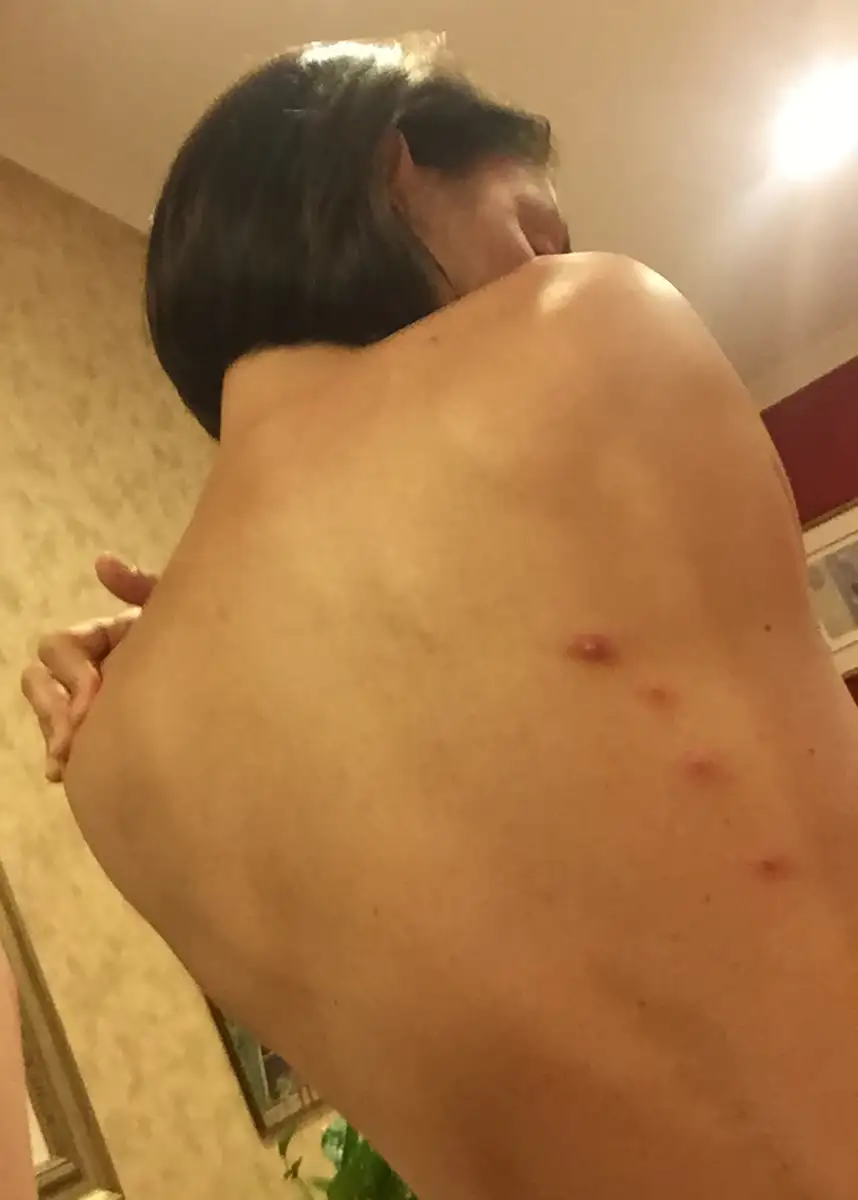
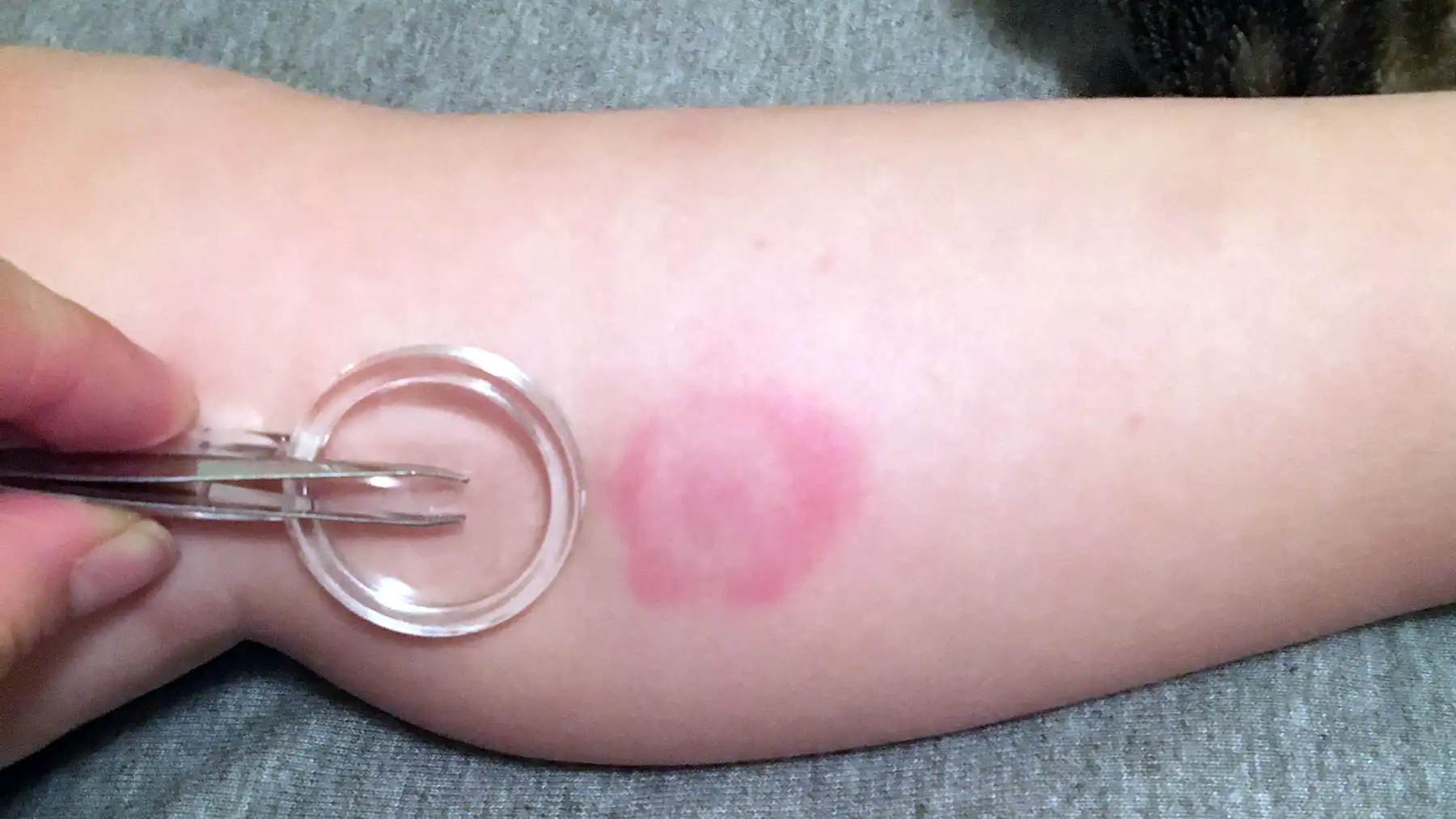
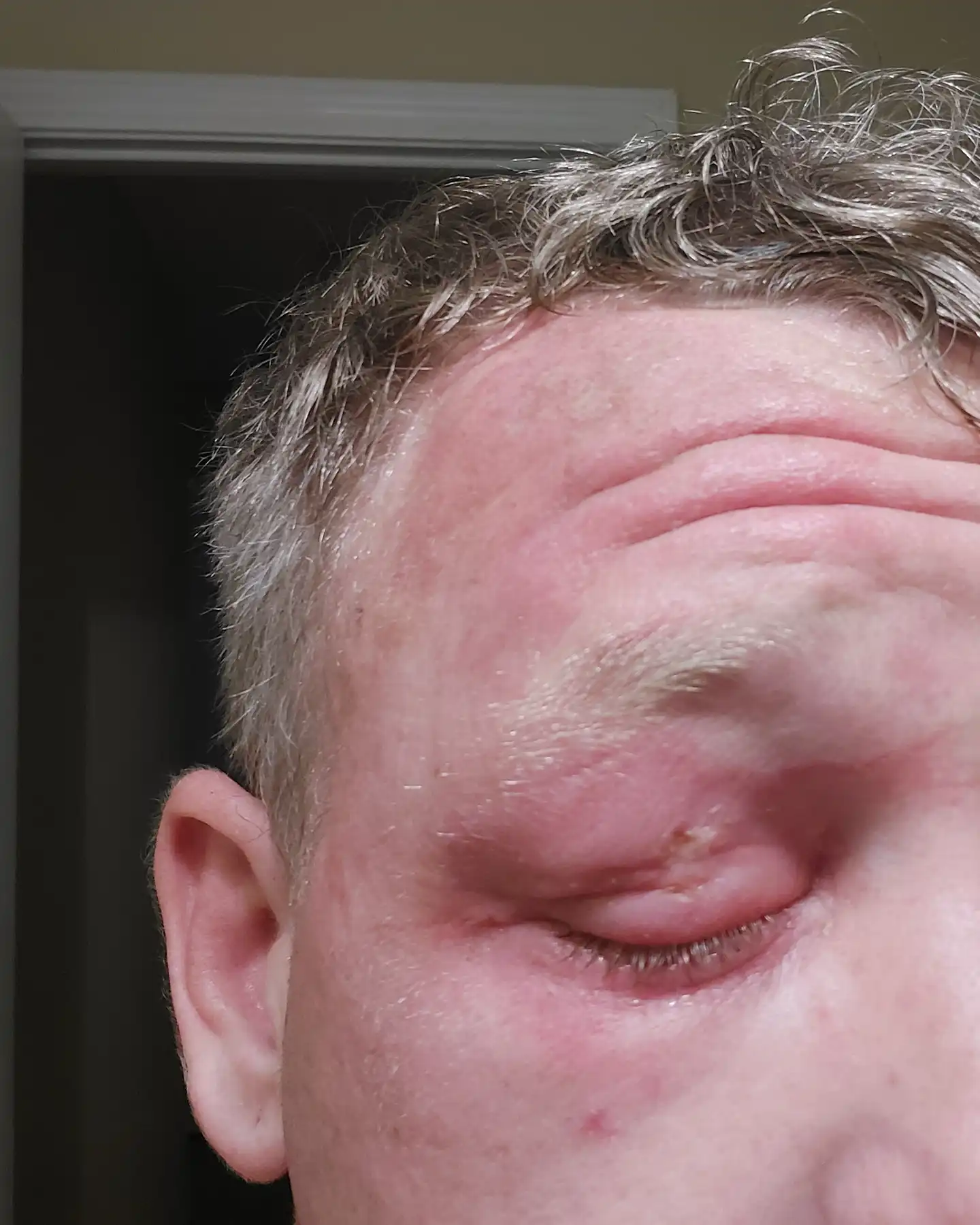
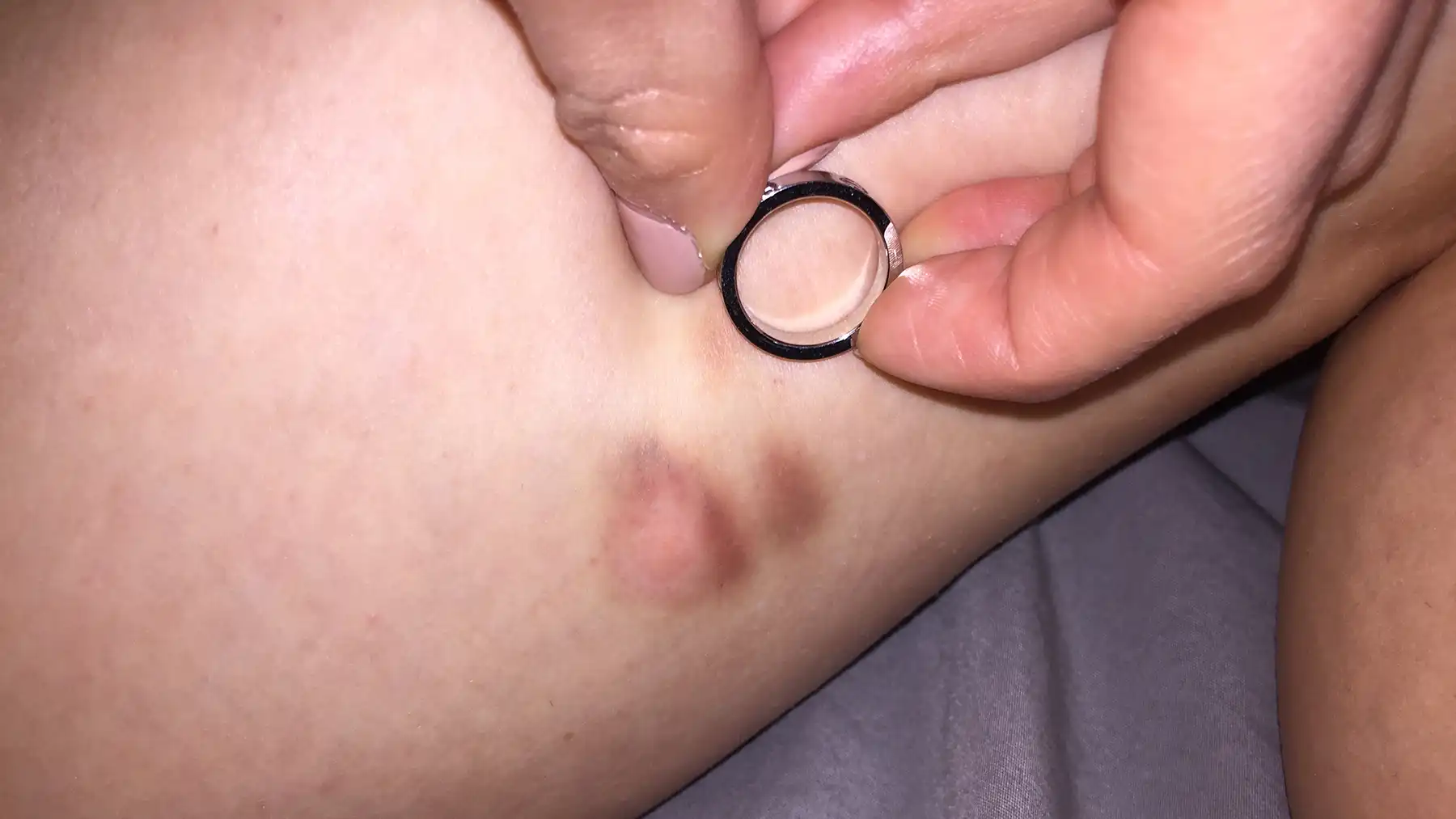
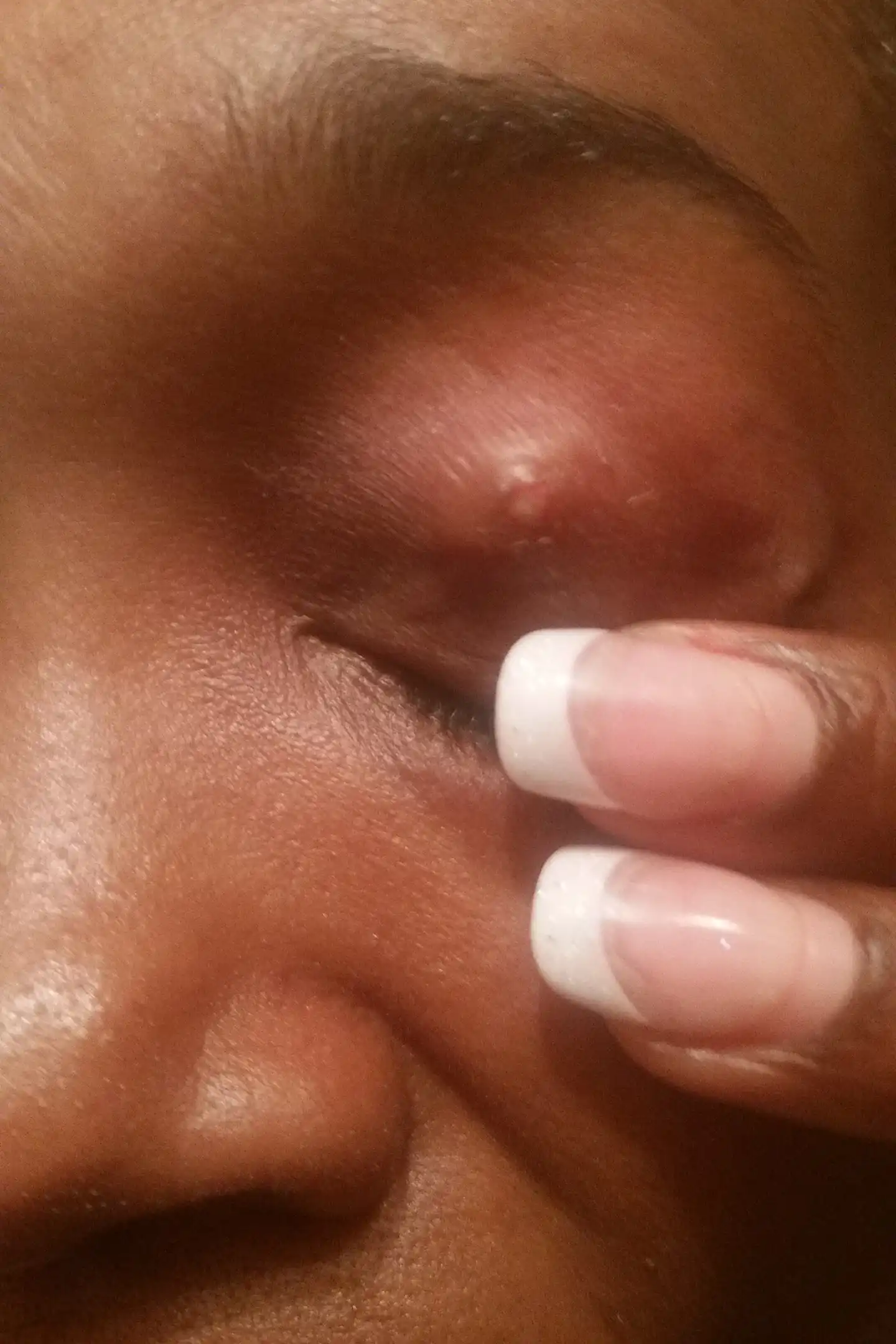
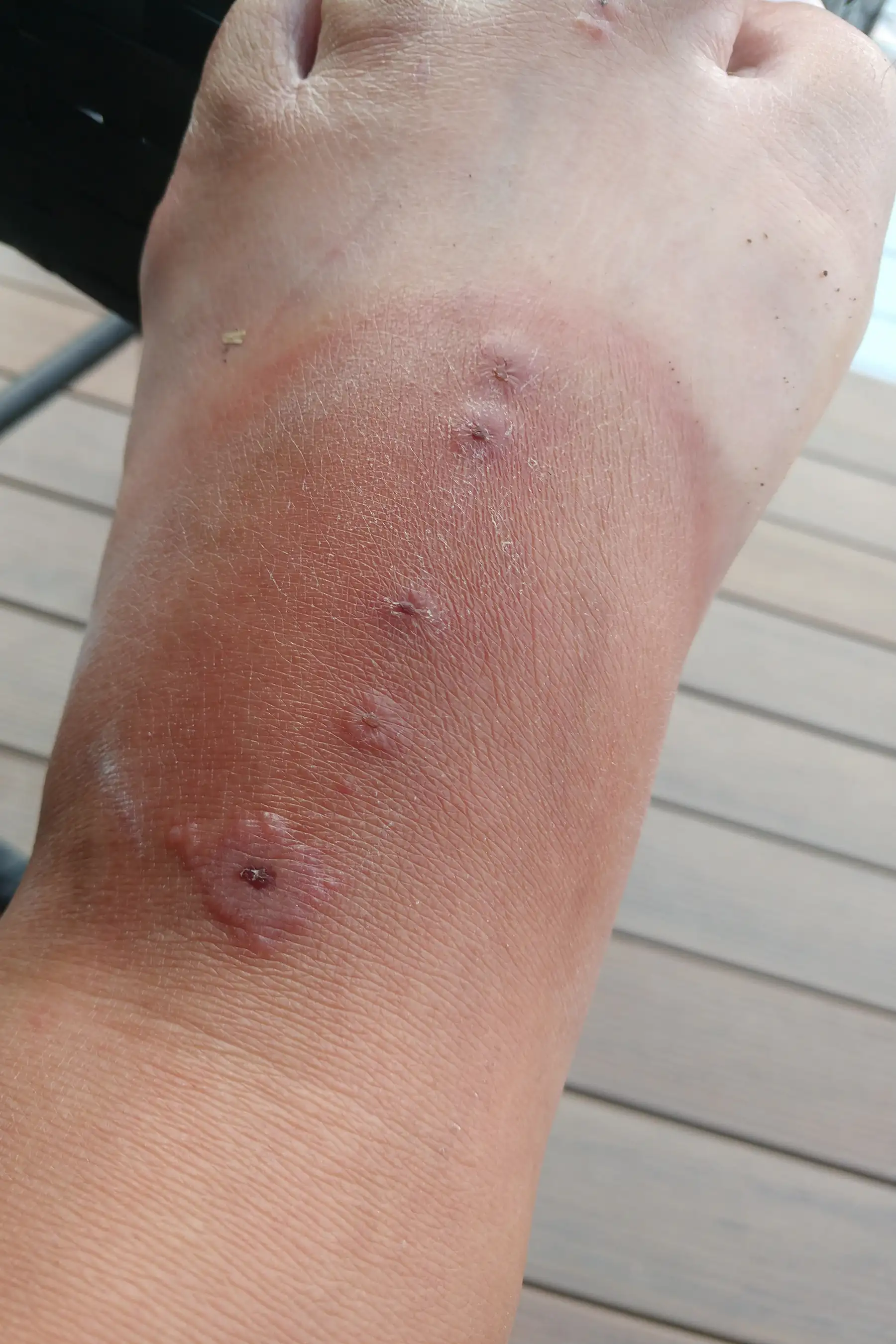
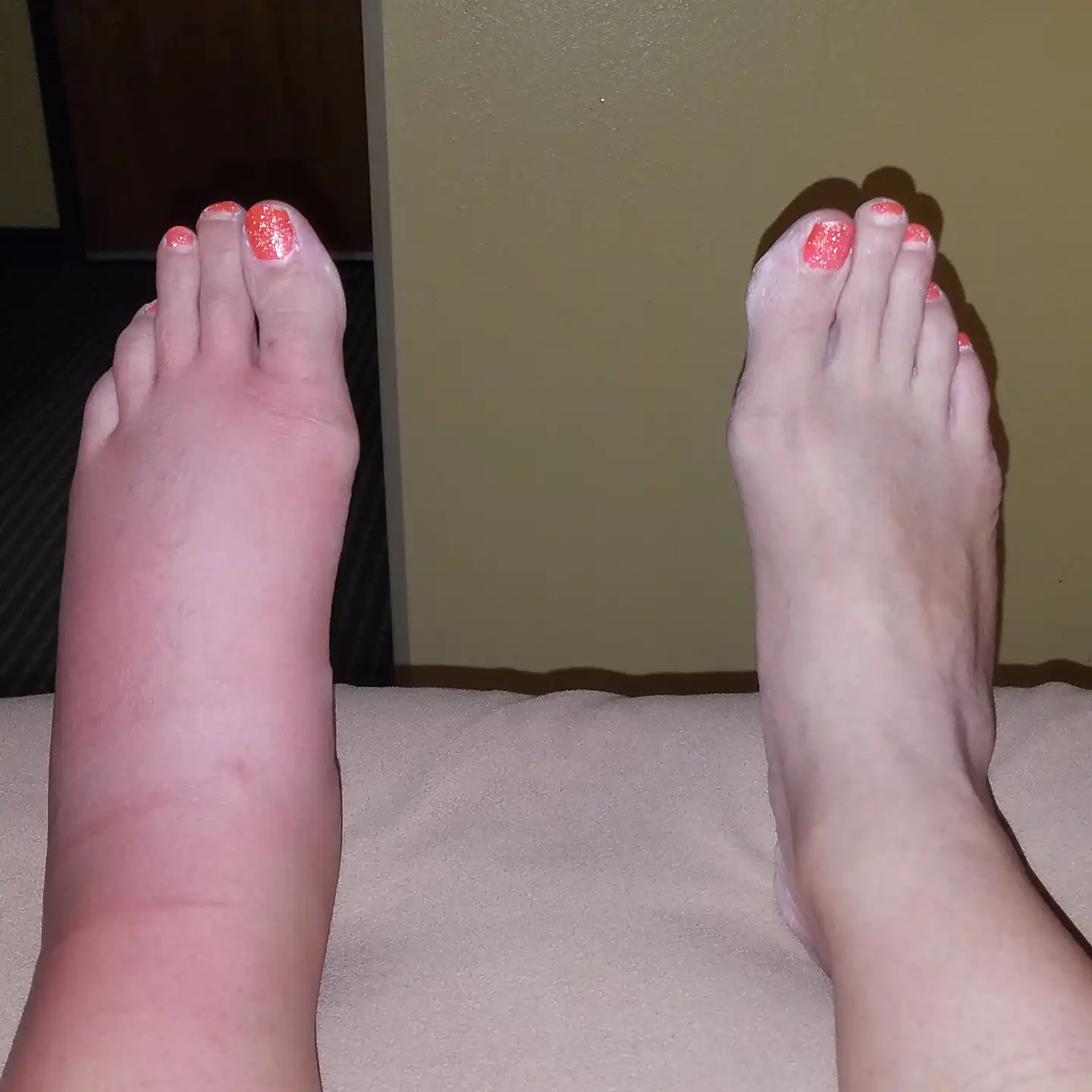
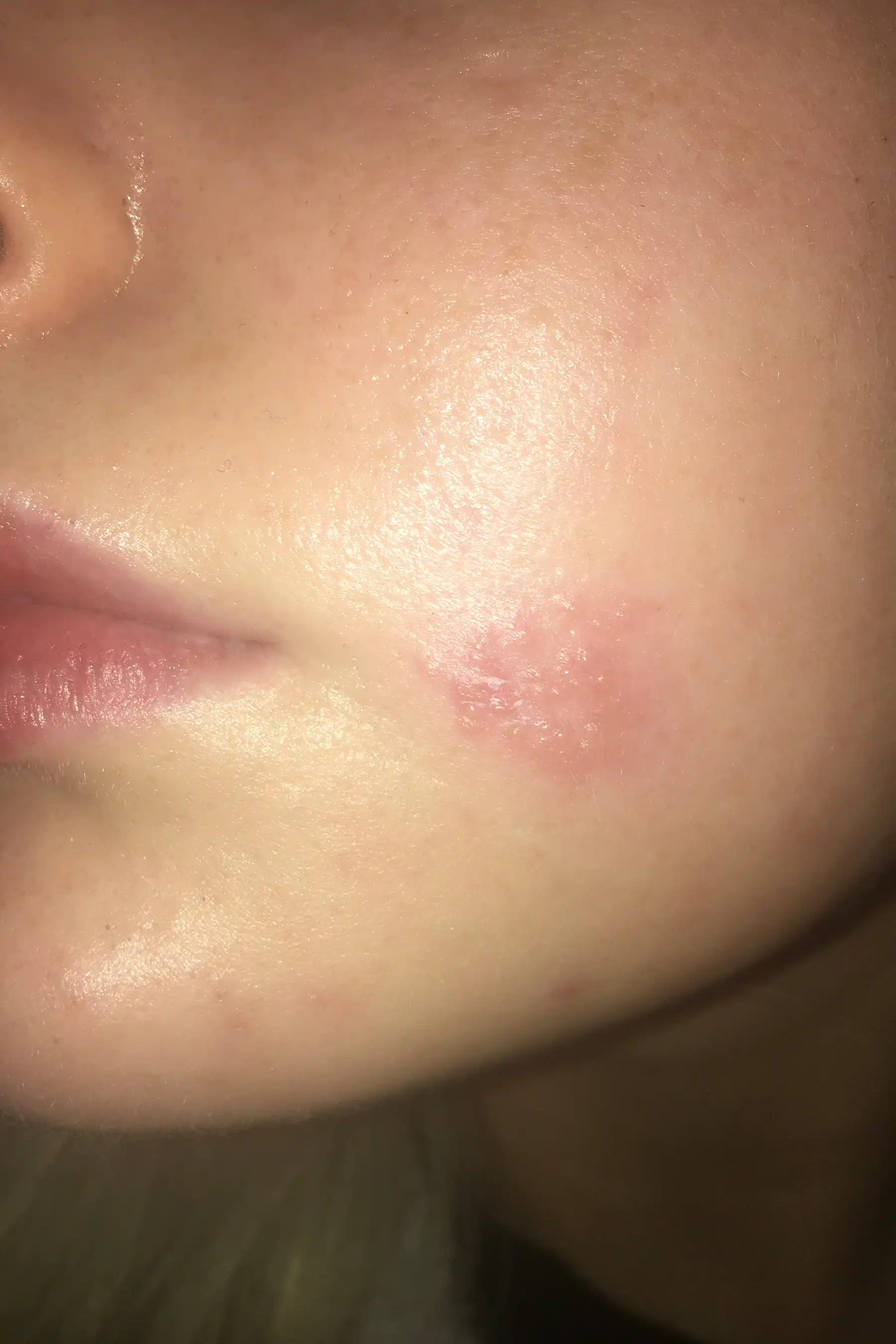
Most spider bites are NOT dangerous. Most bites cause mild redness and swelling that clears up on its own. Many of the more severe images in our collection are the result of delayed treatment or an allergic reaction, not the venom itself.
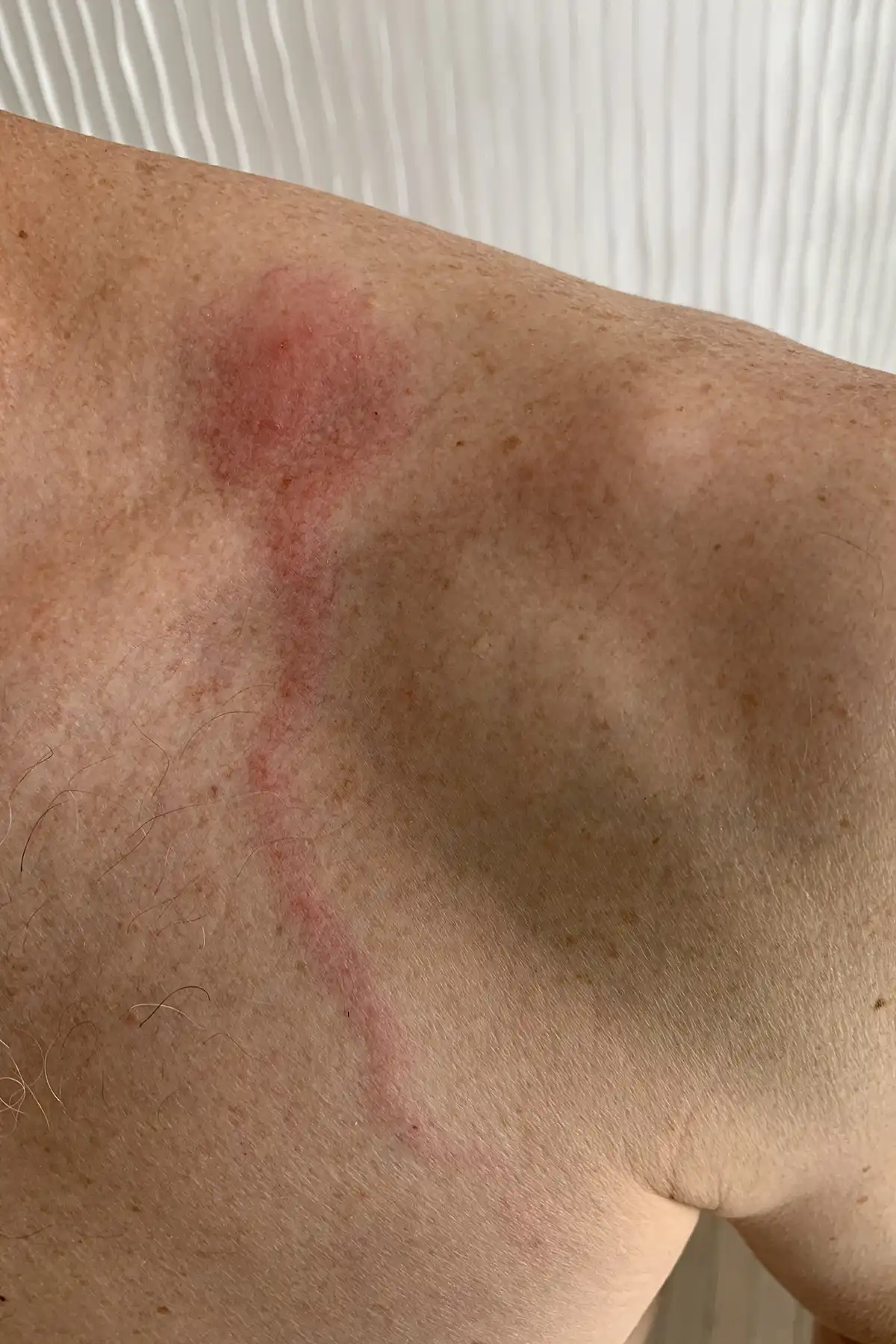
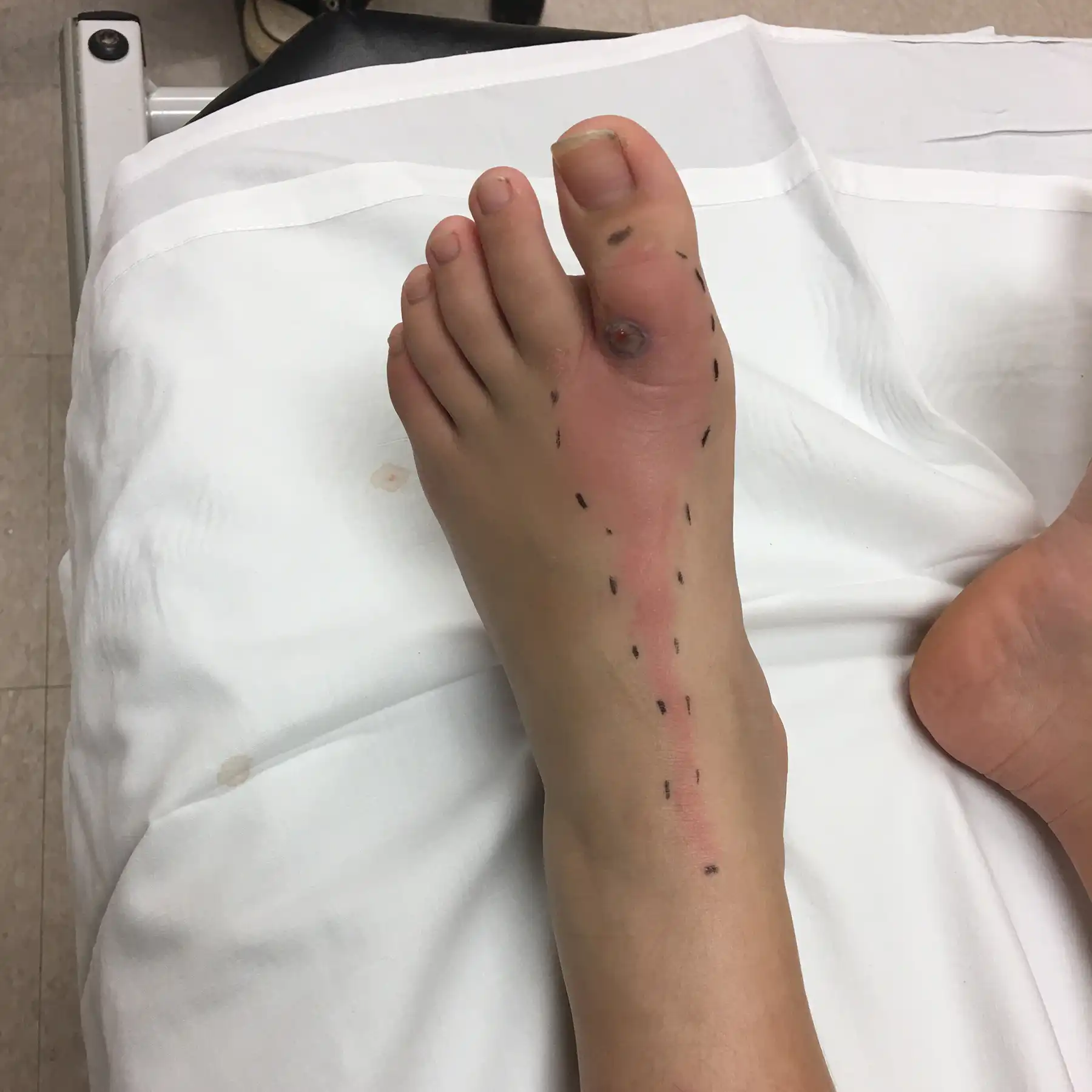
What does a bite with a red line mean?
A red line extending from a bite site is a warning sign that should not be ignored. It usually indicates lymphangitis – a condition where bacteria have entered the lymphatic vessels near the bite and are spreading through the body. This is a sign of infection, not venom. If you notice a red line extending from your bite, go to the emergency room the same day. Left untreated, the infection can spread rapidly and cause life-threatening complications including sepsis. While waiting for medical attention, keep the area clean and do not scratch or pick at the bite as this introduces more bacteria into the wound.
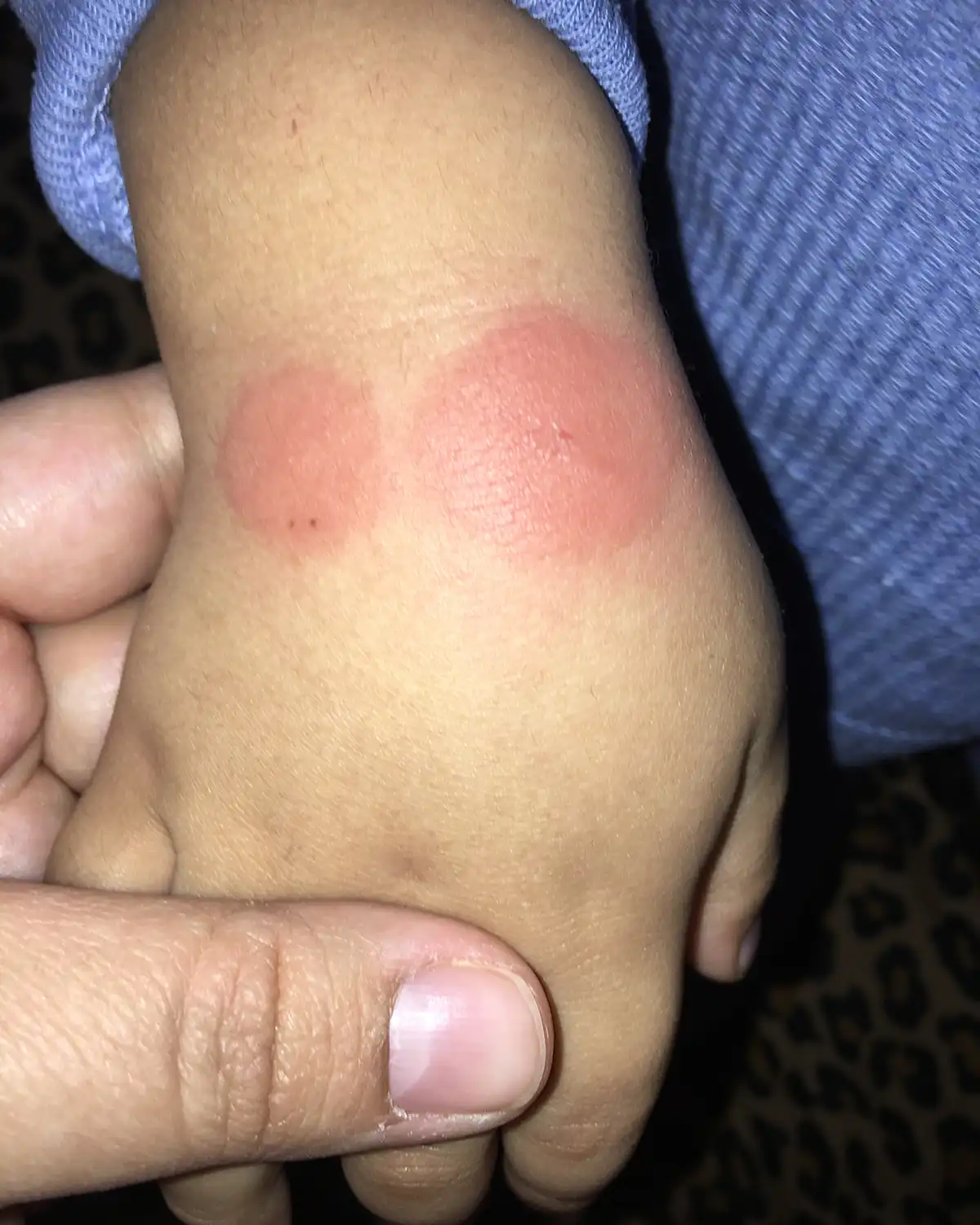
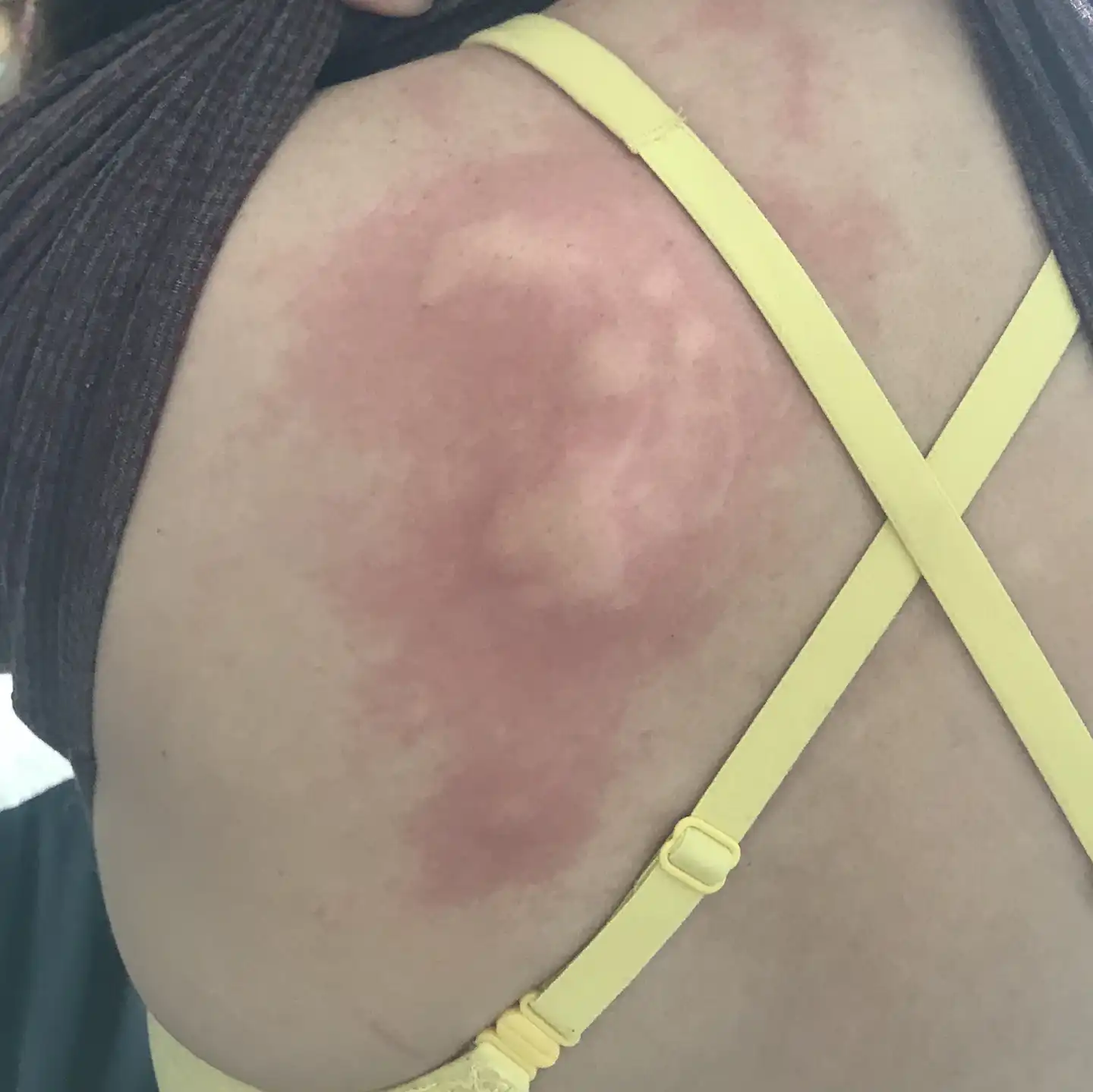
What does a bite with a red circle mean?
A red circle around a bite does not automatically mean a spider bit you. If the mark keeps expanding into a bull’s-eye pattern, that points more toward a tick-related rash than a typical spider bite.
If you see that kind of spreading ring, or you start feeling sick along with the rash, get medical advice the same day. For spider bites, what matters more is whether the area is staying local, getting infected, or developing severe pain, swelling, or a red line moving away from the wound.
Spider Bite Identification Chart
Use this chart to narrow down what you are dealing with. It covers the spiders people ask about most, plus the non-spider causes that get blamed on spiders every day. Click through for photos and full symptoms.
| Likely cause |
What it looks like |
How it feels |
What to do |
| Brown recluse |
Painless at first. A small red mark or white blister that can sink and darken over several days |
Often nothing for hours, then growing pain and itching |
See a doctor the same day if the center darkens or sinks |
| Black widow |
Two tiny fang marks with redness and swelling at the site |
Sharp pain fast, then muscle cramps in the belly, back, or legs within hours |
Go to the ER. Antivenom exists and works |
| Wolf spider |
A red, swollen bump like a bad bee sting |
Painful at first, itchy for days |
Wash, ice, and watch. See a doctor if it worsens after the first day |
| Hobo spider |
Redness and mild swelling. Research does not tie hobo bites to open wounds |
Mild pain and itching that fades on its own |
Wash and watch. A worsening wound points to infection, not the spider |
| Jumping spider |
A small red welt, sometimes barely visible |
A quick pinch, mild itching after |
Wash it and move on unless it grows |
| Brown widow |
A small red mark, less dramatic than a black widow bite |
Local pain, occasionally cramping, usually milder than the black widow |
Wash, watch, and see a doctor if pain spreads |
| Bed bugs (not a spider) |
Itchy welts in lines or clusters that appear overnight |
Itching, several bites at once, night after night |
Inspect the mattress seams and bed frame before blaming a spider |
| Staph or MRSA (not a bite) |
A “bite” that grows into a pus-filled sore or boil and keeps getting worse |
Increasing pain and warmth, sometimes fever |
Doctor, same day. Many horror-story spider bites are really this |
| Shingles (not a bite) |
A band of blisters on one side of the body |
Burning pain, often starting before the rash shows |
Doctor quickly. Antivirals work best early |
| Tick bite (Lyme risk) |
An expanding bull’s-eye ring around the bite |
Often painless. Flu-like feelings can follow |
Doctor. Mention the ring and any tick exposure |
Spider Bite Pictures by Healing Stage
The stage of a bite tells you as much as its first appearance. Here is the usual timeline for a bite that stays on a normal course:
First hours: a small red bump, sometimes with a lighter center. Mild pain or itching. Most bites never get past this stage.
Day 1 to 2: redness and swelling peak. A bite that is going to cause trouble usually declares itself here: spreading redness, hardening skin, or pain that grows instead of fading.
Days 3 to 7: a normal bite fades to an itchy bump and then to nothing. A wound that blisters, opens, darkens, or keeps growing during this window needs a doctor, because by now infection is more likely than venom to be driving it.
Beyond a week: anything still opening, oozing, or expanding after a week is a wound, not a bite, and it deserves medical attention regardless of what caused it.
For a documented day-by-day series of a serious bite, see the brown recluse bite stages photos, which follow one leg wound from the first day to fully healed.
House Spider Bites
Most photos people send us of house spider bites turn out to be something mild. The spiders that share our homes, cobweb spiders, cellar spiders, and the occasional wandering wolf or jumping spider, rarely bite at all, and when they do the result is a small welt that fades in a day or two. If you keep finding new bites in the morning, especially in lines or clusters, think bed bugs before spiders. And if one spider keeps turning up and you want to know what it is, our spider identification guide covers the common ones.
Reader Bite Photos and How They Turned Out
These are real submissions with the story behind each photo, condensed and attributed by first name. The pattern across sixteen years of them is consistent: the scary outcomes almost always come from waiting, and infections outnumber venom by a wide margin.
Karen’s arm: the bite that needed a drain
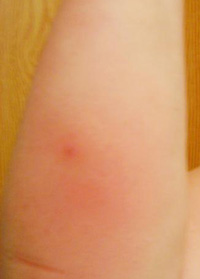
Karen never felt a bite. A pimple-like bump on her arm grew into a hard, hot, spreading knot, and the first diagnosis was a bee sting. The redness kept advancing, antibiotics went in, and the wound eventually had to be lanced and drained at the doctor’s office. It healed, slowly. Her advice afterward: “Don’t wait and see what happens. Get medical attention right away.”
Kendra’s softball-sized swelling was cellulitis
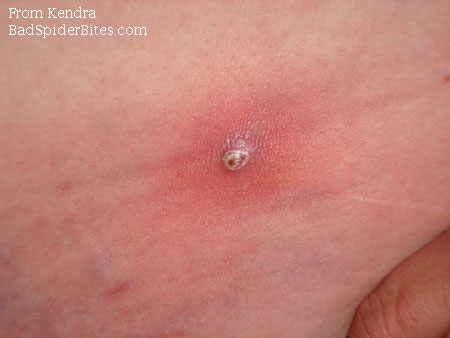
Kendra came home from a river weekend with what looked like a pimple on her stomach. By the next night there was a rock-hard mass the size of a softball under it, along with nausea and sweats, and the ER wrote down insect bite with secondary cellulitis. Antibiotics and a rough week later, the wound drained and she recovered. The bite was minor. The infection was the emergency.
Gina’s five-inch red circle
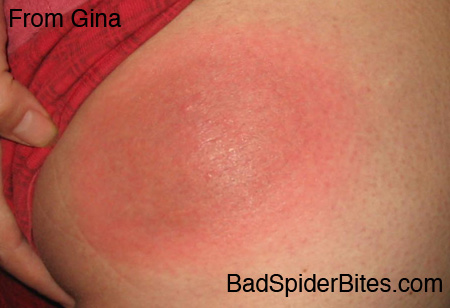
Something bit Gina through her jeans while she stood on a deck. Within minutes the spot looked bad, and by the second day a solid dark red circle about five inches across had formed, with redness reaching toward her groin. Her doctor suspected a spider but not a dangerous one, ruled out ticks, and put her on antibiotics. It healed without drama. Note the difference between her solid circle and the expanding bull’s-eye ring covered above; her doctor used exactly that distinction.
Sheri blamed a spider. It was oak itch mites
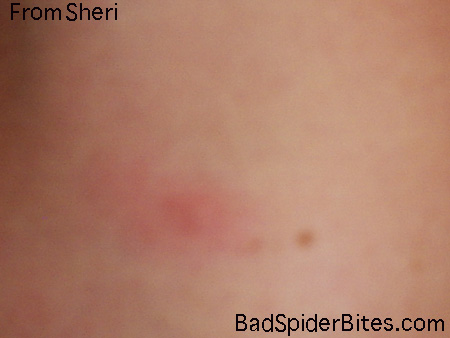
For a month Sheri kept waking with red welts with white pimple-like centers, and never found anything in the bed. Her husband was untouched. The answer turned out to be oak itch mites drifting off the oak trees at her parents’ place. The mites bite hours after they land, so the welts showed up overnight and made the bed look guilty. They cannot live indoors, and showering after time outside ended the mystery.
Lanah’s spider turned out to be bed bugs
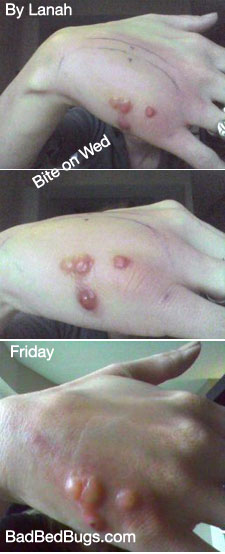
Big welting bites started a week after Lanah moved into a new apartment, four of them at once on one hand, badly swollen. One doctor called it a hand infection, a second called it a histamine reaction to bites. The real answer was on the baseboard heater: dark spots of bed bug evidence, then blood specks under the covers. If bites arrive in small sets overnight, check the bed before blaming a spider. Our bed bug page shows what to look for.
Candy’s severe reaction was the real thing
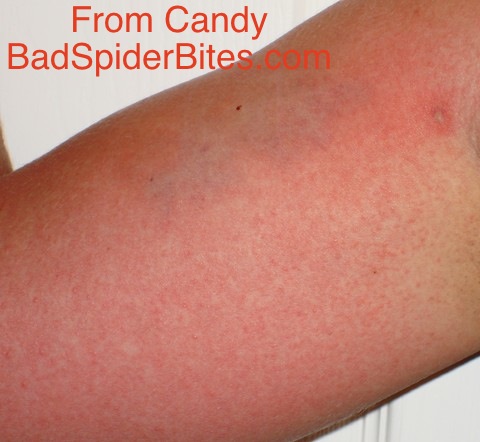
Candy woke with a sore spot near her armpit and spent the day at a theme park. By evening her whole body was flushed red, her heart was racing, and she was badly dehydrated. Urgent care found a fever and could barely find a vein; the hospital admitted her, and an infectious disease doctor concluded she had a systemic reaction to a recluse bite. Her skin peeled for weeks as she healed. Severe venom reactions like hers are rare, and they are hospital business, not home-remedy business.
Compare your bite to our photo library
Browse the photos above to compare what you are seeing. If you are still unsure what bit you, browse our dangerous spider identification guides or check the brown recluse spider bite page for more specific photos and symptoms. If you found the spider itself, our spider identification guide will help you match it by color, markings, and size.