What Does MRSA Look Like
Sometimes things are not what they seem. A visitor commented that he thought his wife had been bitten by a brown recluse, but it turned out to be an MRSA Staph Infection. It looked just like a bite.
Here is information on this infection that can mimic a spider bite. Want to see what happens when a bite gets infected? Check out our section on Staph Infection.
What is Methicillin Resistant Staphylococcus Aureus?
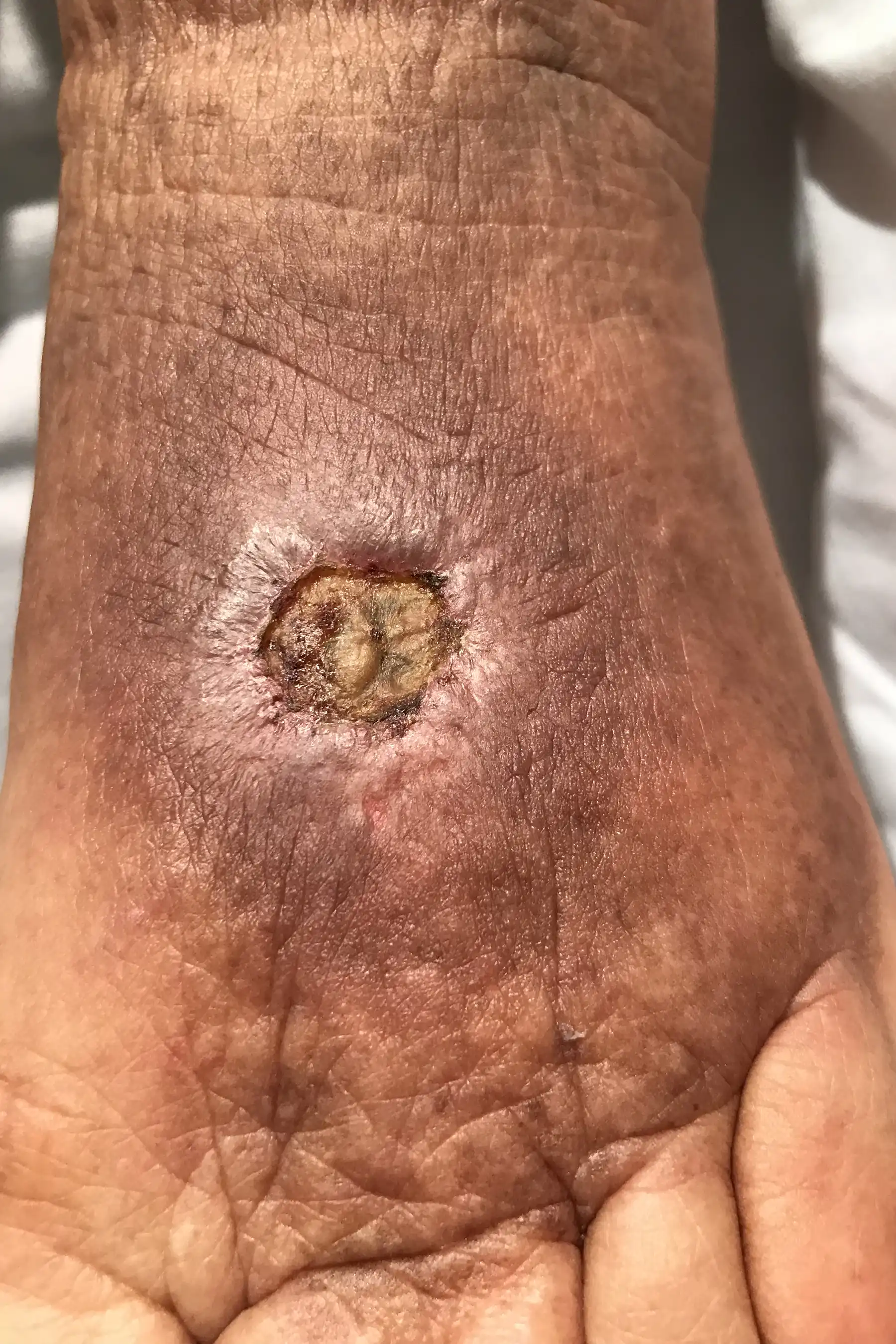
This is what MRSA looks like after healing.
Staphylococcus aureus, commonly called staph, is a bacteria found on the skin and in the nose of many healthy people. It can also grow in wounds or other parts of the body, where it sometimes causes infection. Staph is one of the most common causes of skin infections.
For a long time, Penicillin was the standard treatment for staph infections. Over time, many strains of staph became resistant to Penicillin and related antibiotics. Those resistant strains are what is now called Methicillin Resistant Staphylococcus Aureus, or MRSA. The infections it causes are the same as ordinary staph. The difference is in how they have to be treated.
How MRSA Spreads and Who Is at Risk
In the early stages, MRSA looks like ordinary staph and usually causes no problems unless it gets into an opening in the skin. Once it does, it can cause a skin infection that is harder to treat than a standard staph infection.
MRSA is most common in hospitals and healthcare settings, but it also occurs outside of those environments, particularly in people who have had repeated antibiotic use or who have been in close contact with someone carrying the bacteria. It spreads through direct contact with infected people or contaminated surfaces and objects, including:
- Clothing, towels, and bedding
- Athletic equipment
- Benches in saunas or hot tubs
- Bandages or wound dressings
MRSA is not spread through the air.
Many people carry staph bacteria on their skin without knowing it. When MRSA does cause a skin infection, symptoms typically include redness, warmth, pus, and a wound that does not heal the way it should. That includes wounds that start as an ordinary bug bite and then keep getting worse instead of better. Your doctor may describe these as boils, furuncles, impetigo, or abscesses. In more serious cases, infection can spread to the blood, bone, bladder, or lungs, with symptoms that include fever and pain at the site of infection.
Think you have MRSA?
If you think you have MRSA or another staph infection, see your healthcare provider. It can be difficult to tell what MRSA looks like just by looking at it, and the only reliable way to know whether you need treatment is to get tested. Do not wait on this.
MRSA and other staph infections are treatable. Some skin infections are handled simply by draining the sore and keeping the wound clean. More severe cases may require antibiotics. If your provider prescribes antibiotics, finish the full course even if the infection appears to be improving, and call your doctor if things do not get better.
I, also have had MRSA…. I had back surgery in May of 2011….came home from the hospital….three weeks later a health care worker who was at my home asked to look at my back….she discovered I had a sore where the surgery site was…it also was draining. I saw some drainage on my panties and gowns several days before; but I thought it was just healing from the back surgery site. I had to go to the hospital and they drew tons of fluid from the wound. The day after that the nerurosurgeon had to take me back into surgery to take care of the problem….because I had MRSA. I spent five days in the hospital, and went home with a PICC line. Also, I had to have a wound vac to drain from my surgery site. Nurses had to come to my home each day, and every week they had to draw blood to send to the infectious control doctor. This went on for weeks; but finally I was off of the PICC line and other meds. I do not know if MRSA affected my recovery; but here it is almost ayear later and I have some much pain in my legs I can not stand up or sit down or walk without terrible pain. I had to leave my job at a hospital after 24years, and get disability.