Asian giant Hornet (Vespa mandarinia)
Not afraid of bees? The Asian giant Hornet (Vespa mandarinia), commonly called the Sparrow Bee, is often described as one of the biggest hornets people talk about. Some comparisons put it around the length of a pinkie with a wingspan that can look hand-sized. 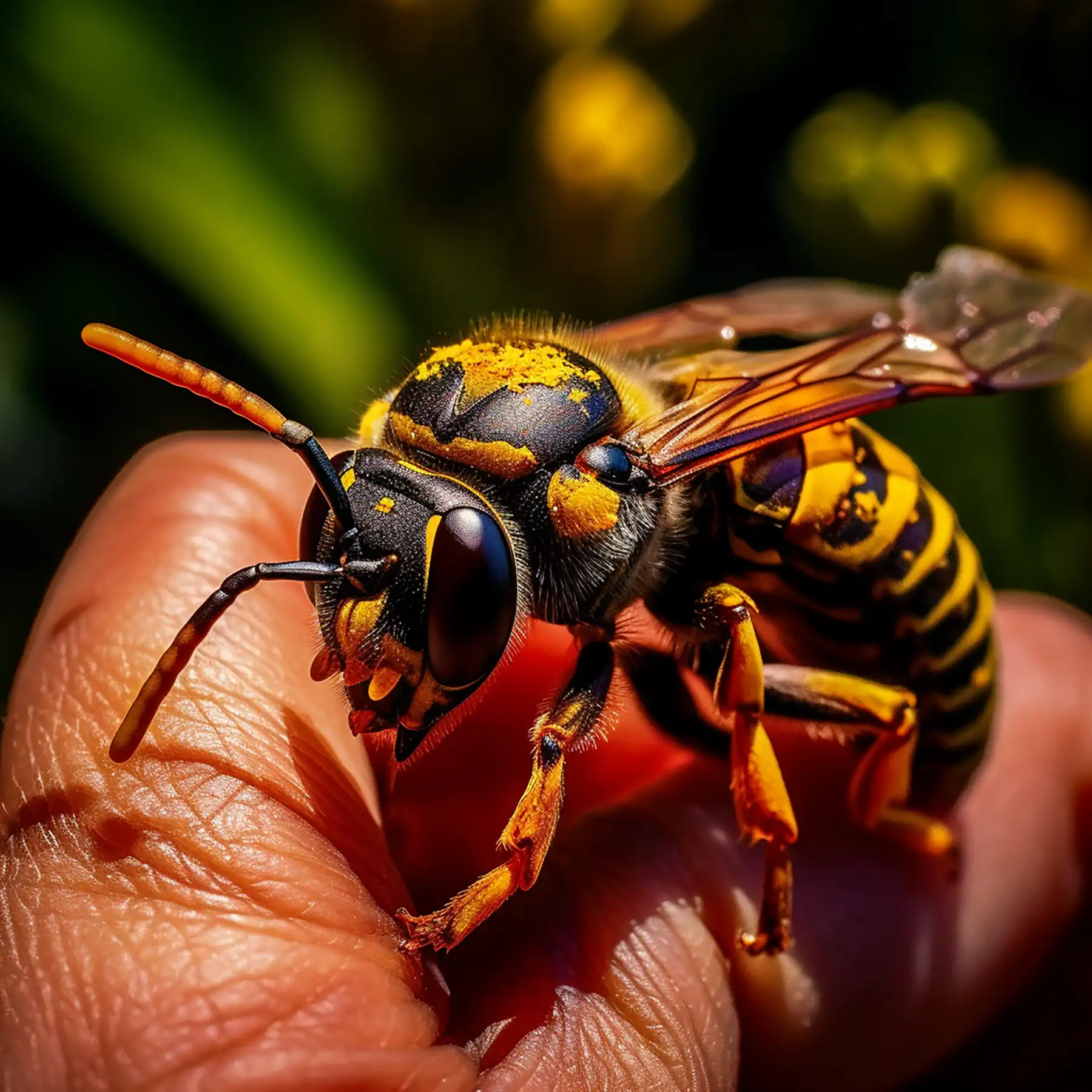 Not allergic to bee stings? A severe sting can still be dangerous, especially if enough venom is involved. People who have described the sting often compare it to having a nail driven into the skin. Reports often describe a large stinger, and unlike a honey bee, it can sting more than once. The hunt starts with this killer hornet locating a hive of honey bees; the scout then sneaks in as close as possible to its prey and sprays the area with a pheromone which serves as a road map for reinforcements. A few Giant Hornets can slaughter a hive of 30,000 honey bees within three hours, leaving only severed heads and limbs – talk about a disadvantage! The honey bees have to act fast, and being disadvantaged, their only hope is to trick the Hornet into entering the hive. They accomplish this by moving away from the hive and letting the Hornet believe the honey is unprotected. Suppose the giant Hornet takes the bait and enters the hive. In that case, hundreds of honey bees hiding inside ambush the intruder covering it with their bodies and gyrating their flight muscles to generate incredible heat. The temperature rises to 115 to 117 degrees Fahrenheit, which is tolerable for a honey bee but kills the giant Hornet (it can only handle 113 degrees). The threat is neutralized with the intruder’s death, which cannot bring reinforcements. Think this doesn’t concern you because you’re human and don’t have honey? These hornets can sting people too, and reports from Japan have at times cited dozens of deaths in severe sting cases. Some accounts say this hornet can fly at surprisingly high speeds and cover long distances in a day, but it does not spend its time hunting humans. Most stings happen when the insect is disturbed and reacts defensively. Are humans stealing larvae? Yep, believe it or not, Many Japanese consider the larva a delicacy and eat them deep fried or as a kind of hornet sushi. Some of the people that die each year are caught trying to steal this larva. If this giant Hornet believes it is in danger, it will use an alarm pheromone to alert others that its nest is under attack – when that happens, you better start saying your prayers because the whole nest will mobilize and attack you in their defense! A nest encounter can be dangerous, which is why avoiding nests matters. What to avoid being stung by the Giant Hornet (or any other hornet)? Then avoid the following:
- Disturbing a nest (including vibrations and loud noises)
- Being within a few meters of a nest
- Disturbing or killing a hornet within a few meters of a nest
- Blocking the path of a hornet
- Breathing on the nest or Hornet
- Rapid air movements
National Geographic TV series EXPLORER had an excellent show that graphically covered this and was a fantastic video! The program was called Hornets From Hell. You’ll see some sites claiming that the giant Hornet sprays humans in the eyes with a flesh eating chemical – not true, but it does sting with such a chemical. They are commonly located in China, India, and the mountains of Japan. 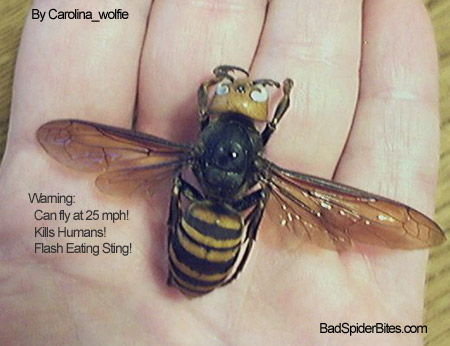
What Readers Were Actually Seeing
For years, readers of this page reported giant hornets in yards across the eastern United States. Almost none of them were Asian giant hornets. The real thing turned up in the Pacific Northwest and became the target of an intensive eradication campaign, but the giants people see almost everywhere else are two lookalikes: the European hornet, a real hornet up to about an inch and a half long that nests in hollow trees and wall voids, and the cicada killer, a big solitary wasp that hunts cicadas and has little interest in people. Both got called murder hornets in reader mail. Neither deserves the name, though the European hornet will defend its nest, especially after being sprayed.
Heather: the hummingbird that was not
Heather was watering flower beds when what she took for a hummingbird turned out to be a three-inch striped insect walking up the side of her house, and her fearless seven-year-old headed straight for it. After a rattled evening of research she had her answer: a cicada killer, matching the cicada chorus in her trees and the shells in her pool. Big, alarming, and about as dangerous as the hose she dropped. Females sting only if grabbed or stepped on, and males cannot sting at all.
Sue: a European hornet sting is still a real sting
Sue disturbed a nest under her mailbox and took a partial sting on the thumb. She did the smart thing first: got her ring off before the swelling could trap it, then iced it. She still spent a rough day queasy and achy with ringing ears before it turned, and a week itching. Her closing advice is the right one: a sting that brings trouble breathing or face swelling is an emergency, every time.

